
The Impact of Weather on NFL Point Scoring
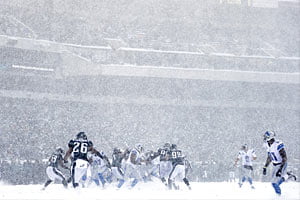
The impact of weather on scoring is often neglected by NFL bettors when betting on the total number of points scored in a game. This article highlights how wind speed causes points scoring to subside in NFL, creating an opportunity to gain a potential NFL betting edge. For those who do not wish to take sides when betting on an NFL game, the obvious alternative is the total number of points scored in the game, including overtime. The NFL has seen a steady increase in the total number of points that bettors can expect to see scored in a game since its reformation. With the exception of minor peaks, totals averaged below 42 points per game, after which an increase in passing, along with various offense friendly rule changes, enabled totals to trend upwards.
Contents
Unsurprisingly, even at these historical highs, the trend has not gone unnoticed by the oddsmakers and although overs were more plentiful than unders since 2018, they still only had a winning strike rate of 51%.
Team based factors play an obvious role in determining match totals. Passing the ball has the potential for large gains, quick scores and often preserves the clock, whereas a side committed to running the football may be expected to score more slowly, while keeping the clock running.
[sc name=”banner468″][/sc]
Matchups are also important, especially as a side can rarely be elite on both sides of the ball. A side which has an excellent offense may also have a below par defense, creating the conditions for a high scoring match.
The Impact of Weather on NFL Scoring Rates
However, an area often neglected by bettors when considering match totals is the impact of weather on scoring rates. Dome sides are immune, but excessive wind speeds can be a considerable hindrance to both the passing and kicking game.
A comparison between the average totals recorded for games played indoors and games that were open to the elements appear to confirm the differences. Over the last decade matches played under a dome averaged a shade over 46 ppg compared to around 42 for those played outdoors.
[sc name=”banner468″][/sc]
However, as with total markets as a whole, the tendency for a dome game to have higher total scoring has also been largely accounted for in the quoted lines.
A comparison between NFL games played under a Dome and Outdoors
| Dome/Retractable Roof | Outdoors | |
| Average Points per Game | 46.2 | 42.4 |
| Average Overs/Unders Quote | 44.6 | 41.7 |
The sample of dome games is smaller and the percentage of such games that went over the total quote allows for a small profit, especially at odds of 1.950 offered at Pinnacle Sports. But these results may just be a random fluctuation and not indicative of future expectations, especially with the oddsmakers at liberty to edge their totals higher and sample sizes are relatively small.
In short, total quotes for indoor games slightly under estimate the amount of games that go over the total, while outdoor contests appear to under estimate the tendency for totals to go under mark, but not to a significant degree in either case. By the way, if you’re checking bookmakers reviews, follow the link to get a list of legal and verified bookmakers.
The additional factors which may contribute to game totals is limited in domed games, but as already mentioned, weather can potentially intervene outdoors. So there may be a way to identify untapped value within this larger sample of outdoor matches.
How wind speed relates to points Totals in the NFL
| Wind Speed (MPH) | Average Points Per Game |
| 0-4 | 43 |
| 5-9 | 40 |
| 10-14 | 44 |
| 15-19 | 39 |
| 20+ | 36 |
Game day weather is available to bettors and the information ranges from temperature, humidity, as well as wind speed and direction.
In the plot above, I’ve shown the average points per game for outdoor games played in the NFL as the strength of the wind increases.
Wind would appear to be of little consequence to a game’s rate of scoring until it reaches speeds of 15 mph and above. The aggregate totals remain fairly consistent above 40 ppg until then, but begin to show a definite and accelerated downward trend, especially at speeds of 20 mph and above.
82 rushing attempts in total were made by the two teams and only 33 passing plays, yielding 13 points in total. The over/under line for the game was set at 34.5 in anticipation of a low scoring game, but still not low enough to prevent a successful under bet.
This single game mirrors a more general trend, that is especially noteworthy when average wind speed attains 20 mph or greater. In the 50 or so such games, average totals were set on the low side at 38.5, but actual match totals averaged even lower at 35.3 and consequently under bets were successful in 64.6% of games.
[sc name=”banner468″][/sc]
Historically, wind speed would appear to be a neglected factor when totals are set. Bettors should note that there appears to be a significant relationship between high wind speed and an increasing tendency for actual match totals to not only decrease, but to also go under the quoted totals.
And the best predicted fit from the data for the strike rate of games going under the quoted total when the average wind speed is 15 mph is 54.5%. The percentage of unders then remains consistently above this figure as winds strengthen even more. For example, at average speeds of 17 mph, the likelihood of the match total going under the quote rises to 55.6% and hits 60% at 25 mph. Many bookmakers run special weekly betting bonuses to engage their player base.
So once again 15 mph or greater would appear to be the point at which wind becomes a significant and possibly under exposed factor, assuming totals continue to be quoted in a similar way in the future, then bettors have the opportunity to gain an edge.
Weather is likely to be an under represented factor when setting and betting on total lines, especially when markets open and develop early in the week, when weather patterns may be unreliable or partially ignored.
Game day weather and longer term forecasts can be found at such sites as NFL Weather, although as with any prediction, there will still be a degree of uncertainty associated with these forecasts.
However, from past evidence, weather conditions may provide a valuable edge when betting on game totals, with wind speed an obvious, but by no means the only weather related factor to consider in such markets.
FAQ: The Impact of Weather on NFL Point Scoring
How does wind affect scoring outcomes in NFL games?
Wind is one of the most significant weather factors impacting NFL scoring because it directly interferes with passing accuracy and kicking performance. Quarterbacks often struggle to maintain control over the ball in high winds, leading to shorter throws or increased interceptions. Long passes become riskier, which can limit offensive strategies and force teams to rely more on the running game. Field goal attempts, especially from distance, become unpredictable or entirely avoided by coaches. Bettors often see point totals drop in games where wind speeds exceed 15–20 miles per hour. Understanding how specific stadiums react to wind patterns also provides an edge. Teams that rely heavily on aerial attacks are more vulnerable under such conditions.
Why do rain and snow reduce point totals in NFL matches?
Precipitation leads to slippery conditions on the field, making ball handling more difficult for both offensive and defensive players. Rain can result in fumbles, dropped passes, and a general decline in timing for complex offensive plays. Snow complicates running routes, footing, and visibility, which slows down the game overall. In such conditions, coaches typically shift to conservative strategies that favor possession over explosive scoring. These changes naturally reduce the number of big plays and limit time of possession per drive. Bettors observing weather forecasts can anticipate lower totals and adjust accordingly. Teams with strong defensive units tend to thrive in poor weather scenarios.
Can extreme heat or cold influence the pace and scoring in NFL games?
Yes, both high and low temperatures affect player stamina, decision-making, and in-game tempo. In extreme heat, fatigue sets in more quickly, increasing substitution rates and potentially slowing offensive tempo. Players may cramp or experience dehydration, which impacts performance consistency across all four quarters. In bitter cold, ball handling becomes harder, and kicking distance can suffer due to the denser air. The cold can also stiffen joints and slow reflexes, especially for skill-position players. Some teams are conditioned to specific climates, giving them a subtle advantage at home. Bettors who factor in temperature extremes can better forecast scoring potential.
Do indoor stadiums neutralize weather-related betting variables?
Games played in domed or retractable-roof stadiums are largely immune to external weather fluctuations, offering more consistency in scoring trends. Without wind or precipitation, offensive schemes can execute with fewer disruptions, which generally favors higher totals. Kickers also perform more predictably indoors, improving the likelihood of successful field goals. Bettors can rely more confidently on statistical trends for indoor matchups, as weather becomes a non-factor. That said, not all indoor teams are equally efficient offensively, so team form still matters. Comparing over/under performance between indoor and outdoor games can reveal profitable patterns. Weather handicapping is less necessary when the venue is climate-controlled.
How do bettors typically adjust to forecasted weather before NFL games?
Sharp bettors closely monitor weather reports days in advance and again just before kickoff to assess how conditions may affect scoring. A shift in expected wind or rain can lead to significant movement in betting totals, especially in markets with low volume. Weather-aware punters will often react early to grab favorable lines before sportsbooks adjust. In some cases, bettors may even hedge previous wagers if weather conditions drastically change. Using local meteorological data rather than general forecasts can lead to more accurate assessments. The ability to interpret weather’s tactical impact separates casual bets from informed wagers. Timing and discipline are essential in reacting effectively.
Are certain teams better equipped to play in poor weather conditions?
Yes, teams that emphasize a strong running game, solid defense, and physical line play are typically better suited for adverse weather. Such teams can maintain control of the ball without relying on deep passes or precision timing. Additionally, franchises located in traditionally colder regions often train for and embrace poor conditions. Quarterbacks with strong arms and experience in wind-heavy stadiums also tend to perform better than average when weather turns bad. Bettors should review past performances of teams in similar conditions for guidance. Not all poor-weather games produce the same outcomes across different matchups. Weather experience adds a situational advantage that shouldn’t be overlooked.
Does weather affect totals more than spreads in NFL betting?
While both betting markets are influenced by weather, totals tend to shift more noticeably in response to adverse conditions. This is because scoring potential is more directly tied to environmental disruptions than margin of victory. A team might still cover the spread even in bad weather by adapting more effectively than the opponent. However, both teams are likely to produce fewer total points, pulling the game under the posted line. Bookmakers often make more rapid adjustments to totals when forecasts show incoming storms or strong wind. For spread bettors, it’s still important to evaluate how each team handles weather tactically. But overall, totals react more sharply to atmospheric changes.
Can weather be used to identify value in NFL betting markets?
Yes, weather often creates inefficiencies in betting markets, especially among casual bettors who react emotionally or late. Public betting trends sometimes ignore subtle weather forecasts that could dramatically shift how a game unfolds. If a line has not yet moved to reflect a strong wind or rainstorm, savvy bettors can exploit that delay. Additionally, some matchups may be overcorrected if the public overreacts to mild weather news. Understanding both the real impact of the weather and how the market perceives it allows for better line selection. This is one of the most consistent sources of value during the fall and winter months of the NFL season.
Are weather-based betting strategies supported by historical data?
Historical data clearly shows that games played in strong wind or heavy snow often trend toward the under. Several long-term studies have linked low passing efficiency and reduced scoring to specific weather benchmarks. By tracking totals and game conditions over several seasons, patterns emerge that support weather-based strategies. Of course, bettors must also consider rule changes and team evolution across seasons. Contextualizing historical results with current offensive styles and coaching philosophies ensures relevant analysis. Using databases that include weather conditions along with scorelines can help identify these trends. Data-driven insights enhance the reliability of weather handicapping.
How should bettors factor in sudden weather changes during live betting?
Live bettors who react quickly to in-game weather shifts—like sudden downpours or wind gusts—can gain a major edge. Changes in scoring pace or field goal confidence often lag behind what’s visible on broadcast or radar. Observing real-time game tempo, missed passes, and coach adjustments offers clues on how weather is impacting play. Quick reactions are essential, as sportsbooks adjust odds rapidly once impact is clear. Recognizing patterns like increased rushing plays or shortened passes can guide mid-game wagers. The key is blending meteorological awareness with situational football knowledge. When done correctly, live betting in weather-affected games can be highly profitable.