
Odds2Win
Odds2Win
daily sports predictions & betting insights

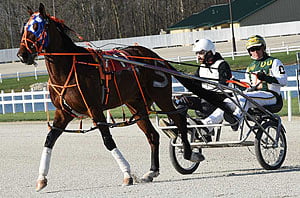
The History of the Racing Sulky
The History of the Racing Sulky

One of the first definitions of a sulky came in the mid-1800’s when the vehicle in question had heavy wooden wheels with broad-tires strong enough to be used over any kind of roads and a straight iron axle to which two elliptical springs were attached. Described as “a light two-wheeled carriage for a single person,” the frame of this “sulky” was bolted to the tops of the springs and the seat had four supports attached to the frame. The drivers kept his place by bracing his feet against a stout cross bar. When this “sulky” began to appear on racetracks, stirrups were added. Obviously, strength and weight were not important items at this time.

In the early 1920’s Webster’s Dictionary defined a sulky as “so called from the owner’s desire to ride alone.” Legend also has it that a woman named the vehicle with the comment that “only a man would use it.”

The sulky was in common use in North America before the Revolution, and was used primarily by doctors and those who wanted to travel light. In 1790 President Washington sent Col. Marinus Willett from New York to Georgia as a secret agent to invite Alexander McGillivray, the Chief of the Creek Indians, to visit him in hopes of making a treaty. Willett went in a sulky. The Chief returned and the whole crew came back together in a wagon.

When trotters and pacers began to appear in races between 1820 and 1830, they were primarily raced under saddle. In the next decade, however, sulkies and wagons were used and by 1860 races to saddle in this country were rare and by 1870, they had been phased out.

The first change made to the sulky in races was the removal of the springs, which reduced the vibration and lowered the seat of the driver. The straight axle remained for many years and a close hitch was thereby impossible. This sulky had a tendency to make horses rough-gaited when they became leg-weary in long races. In those days it was also an ordinary occurrence for a driver to let his horse gallop in hopes that the change of gait would rest him by bringing another set of muscles into play.

A few manufacturers tried to improve the sulky by increasing the height of the wheels, and some were six or seven feet high. According to one observer at the time, there was a considerable amount of wobbling when the driver was being whisked around the flat turns of the old time tracks at a 2:20 gait.

A Boston carriage builder named Pray made a sulky with a steel arch axle. He removed the supports from the seat, which permitted a closer hitch but increased the weight. From 1850 to 1870 sulkies were made primarily by carriage builders as a side line. Charles Caffrey, a carriage builder in Cambridge, New Jersey, was one of the first to introduce changes which helped to lower speed records.

[sc name=”banner468″][/sc]

Caffrey made his first sulky with a wooden arch axle, which helped to reduce the weight and improve racing qualities. He also had the idea that a vehicle free from vibration and horse motion would keep a horse smoother-gaited and increase speed rates. This sulky retained its popularity until the “bike” sulky appeared.

For many years the only rival to Caffrey’s sulky came from Oliver Toomey who manufactured a “Truss-Axle Sulky” at Canal Dover, Ohio.

In 1892 a pair of bicycle tires were added to a sulky and brought out at a race in Worchester, Massachusetts. A pacer named Alfred D won in 2:29.4 on June 8 of that year.

After that it became easier to improve on the first true bike sulky. The Frazier Factory at Aurora, Illinois rushed into the business with a tubular sulky. Other manufacturers introduced new features, including one that had an arch so high that the driver’s seat was almost on line with the horse’s back, which often resulted in some pretty nasty accidents. Some of the most generous bonuses come from newer bookmakers looking to attract customers.

As before, the experimentation with wheel heights continued. A man by the name of Payne, from Troy, New York sent out a long shaft sulky with 24-inch wheels, resulting in lowering the driver and cutting down on wind resistance.

By the 1920’s, most sulkies were made at Marion, Ohio. The standard was 33 to 40 pound bikes with 28″ wheels with all wire spokes.

Of course since that time the bike has undergone a few other changes, and manufactures are constantly looking for ways to improve wind resistance, better tracking of wheels and better distribution of weight. The 20th century has witnessed the single shaft sulky, the cheetah, the under-slung, the aluminum, and a host of other spin-offs. By the way, if you’re looking for bookmakers rating, follow the link to get a list of legal and verified bookmakers.

In spring 2003 Chicago-based trainer Tom Harmer devised a sulky coined the “AdvantEdge 6.3” because it brings the horse 6.3 inches closer to the inside of the track, thus lowering the amount of ground a horse would have to travel over. In that same vein, “The Outlaw” appeared later in the year, being used by Dave Palone on most of his mounts at the Meadows in the fall of 2003. This sulky was developed by Ohio horseman Craig Stein. Both bikes are narrower than conventional sulkies, and both have the seat of the race bike moved over closer to the left side on the arch. These innovations, coupled with better-bred horses and improvements in racetrack surfaces have all led to what those first sulky manufactures were striving for: faster speed records for pacers and trotters.

FAQ: The History of the Racing Sulky

A sulky is a specially crafted two-wheeled cart used in harness racing that enables the driver to steer the horse while seated behind it. Unlike saddle racing, this setup allows for a low center of gravity and minimal aerodynamic drag. Its construction is focused on being as light and balanced as possible, which directly impacts the horse’s efficiency. The sulky acts as the connection between human and horse, translating strategy into motion. If the sulky is poorly designed or improperly adjusted, it can interfere with the horse’s natural stride. For this reason, the sulky is not just equipment but a performance-enhancing element. Its design directly influences race results at the highest level.

Initially, sulkies were bulky, wooden frames with little regard for speed or comfort. Over the decades, their form was refined to reduce weight and increase aerodynamics. The transition from wood to metal—first steel, then aluminum—allowed for more efficient movement. Eventually, high-tech composites such as carbon fiber revolutionized the build further, drastically lowering resistance. Innovations were guided not only by speed but also by safety and ergonomics. Today’s sulkies reflect years of iterative design, tailored for peak race-day performance. Their evolution mirrors the increasing professionalism of the sport.

Modern sulkies are a product of precision engineering, featuring lightweight frames, aerodynamic profiles, and balanced distribution. The use of tubular metals and synthetic materials has helped cut down on unnecessary weight. Wheel design is optimized to absorb shock while maintaining traction on high-speed turns. Some models offer ergonomic seats with shock absorption for longer races. Enhanced fittings allow quick adjustments without compromising stability. Each component is engineered to reduce energy loss and promote smoother motion. As a result, current sulkies are both more efficient and safer than their historical counterparts.

The sulky plays a pivotal role in how the horse performs, particularly in maintaining pace and stride rhythm. An unbalanced or heavy sulky can hinder a horse’s ability to accelerate or corner properly. Conversely, a well-designed sulky complements the horse’s natural gait and allows for more fluid motion. The way weight is distributed across the harness affects joint strain and stamina. When drivers and trainers optimize sulky setup, they can unlock performance gains not achievable through conditioning alone. Sulky alignment can be the difference between finishing first or fading on the final stretch. The margin for error is minimal in professional races.

Yes, sulkies vary based on purpose, race type, and even individual horse requirements. Lightweight sprint sulkies are built for speed and responsiveness, while others prioritize stability over long distances. Some models are better suited for certain track types or weather conditions. Additionally, there are training sulkies used exclusively for workouts and conditioning. The right sulky is chosen after considering the horse’s gait, health, and performance strategy. These differences are subtle but crucial. The variation helps drivers and trainers adapt more effectively to race-day variables.

Technological innovation has transformed sulky production, introducing materials like titanium blends and incorporating wind tunnel-tested shapes. Data from races is now used to inform frame geometry and wheel placement. 3D printing allows for custom parts that match a horse’s anatomy more precisely. Advanced materials not only improve speed but also reduce wear and tear on both horse and equipment. Sensor systems are in development to monitor stress points in real time. The synergy of design and tech results in tools that elevate performance and minimize injury risks. Each generation of sulky becomes more data-driven and efficient.

Racing authorities set stringent criteria for sulky dimensions, materials, and safety features. These rules are enforced to ensure fair competition and protect animals and drivers. Sulkies must undergo regular inspections, and any signs of structural weakness can lead to disqualification. Modifications outside the regulated parameters are not allowed, even if they offer performance benefits. Compliance ensures all participants race under similar conditions. These rules also drive innovation within allowable boundaries. The regulatory framework balances innovation with ethical responsibility.

Drivers rely heavily on sulky responsiveness to implement their tactics during a race. The seat height and wheelbase influence reaction time and stability in crowded fields. A sulky that responds well to directional changes helps the driver position the horse for maximum advantage. Poorly adjusted equipment can limit maneuverability or even increase the chance of contact with other racers. Drivers often personalize sulky setups to match their racing style. This custom alignment allows better communication between driver and horse. Fine-tuning these elements can sharpen strategic execution.

Yes, many professional stables invest in sulkies designed for a specific horse’s physical characteristics. Adjustments may include shaft angle, seat positioning, and wheel clearance. These refinements help accommodate gait quirks or existing health issues. Custom fits reduce drag and increase stride efficiency, resulting in better time splits. Trainers often work with sulky manufacturers to implement design feedback based on training results. Tailored sulkies are especially common among high-performing horses with long racing careers. The goal is always to maximize output while minimizing risk.

The next wave of sulky innovation will likely include smart features such as real-time telemetry and adaptive materials. Engineers are exploring flexible frames that adjust under force for improved comfort. There’s also interest in using AI to analyze race data and suggest optimal configurations. Environmental sustainability is beginning to influence design, with recyclable and lower-impact materials gaining attention. Customization will become more precise as digital modeling improves. In the long term, sulkies may evolve into intelligent racing tools that provide feedback during competition. The blend of athleticism and technology will continue to shape this essential racing component.