
Best Payment Methods for Online Betting in South Africa in 2026: PayShap, Instant EFT, Cards and What to Check Before You Deposit

Deposit speed is only one part of the picture. In South Africa, a payment method should be judged by the full path from funding to withdrawal: how clearly limits and fees are shown, how PayShap, Instant EFT, or cards behave once verification starts, and whether the cashier still works smoothly when it is time to cash out.
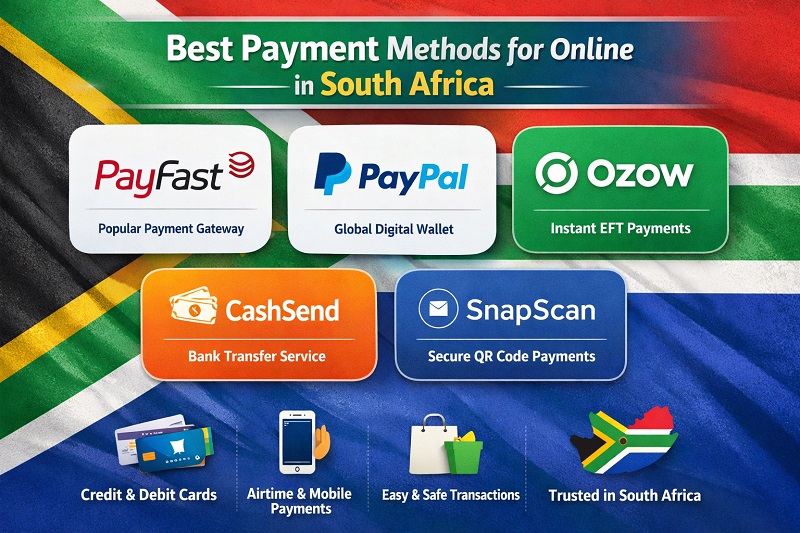
South Africa Betting Payment Methods in 2026: PayShap, Instant EFT, Cards and Key Deposit Checks
That distinction matters because South Africa’s payment environment is moving toward faster digital rails, and PayShap is now part of any practical discussion about betting deposits. But faster banking rails do not mean that every bookmaker cashier is equally transparent or equally convenient once money needs to come back out. A fast deposit button can still lead to a slow payout queue, a bank-account mismatch warning, or a request for fresh documents after the bet has settled.
The real test is practical. Can the operator show the accepted method before registration is completed? Does the cashier explain whether the same method is used for withdrawal, or whether payout is redirected to a verified bank account? Are fees, minimums and pending times visible before the first transfer? Those questions matter more than a generic claim that deposits are instant.
Why PayShap matters, and where its advantage ends
PayShap deserves attention because it fits the broader shift toward faster, simpler digital payments in South Africa. For betting users, that usually means less patience for clumsy deposit flows. If a site advertises speed but still pushes you through unclear handoffs, delayed balance updates, or poorly explained beneficiary confirmation, the weakness is in the cashier design rather than the payment rail itself.
When PayShap works well on a betting site, it can be useful for smaller and mid-sized deposits where you want a quick top-up close to kickoff without typing full card details. It is especially helpful for users who already trust bank-based transfers more than card entry forms. But that advantage should be read narrowly. A convenient PayShap deposit does not prove that the same operator will process your withdrawal just as cleanly. You still need to check whether payout goes back through a verified bank identity, whether additional bank proof may be requested, and whether the cashier explains pending review times in plain English.
PayShap should be treated as a convenience advantage, not as proof that the whole cashier is strong. It can improve the deposit stage, but it does not remove the need to check how withdrawals are handled.
Instant EFT is still common, but the user experience is not always identical
Many South African bettors are already familiar with Instant EFT because it feels closer to normal bank behaviour than card funding. That familiarity can be useful, especially for users who prefer not to expose card limits across multiple gaming sites. The mistake is assuming that every Instant EFT option behaves the same way. One operator may show a clean bank selection page, a clear status update and near-immediate wallet credit. Another may insert extra redirect steps, ambiguous confirmation wording or a delay between bank approval and bookmaker balance update.
That is why Instant EFT should be judged on three concrete points. First, how much friction exists between the moment you choose your bank and the moment funds appear in your betting balance. Second, whether the reference and status are clear enough to resolve a failed or duplicated payment without support drama. Third, whether the operator later treats your verified bank account as the natural withdrawal destination or starts forcing extra review once you request a cashout.
- Good Instant EFT flow: clear bank handoff, clear confirmation, clear posted balance, clear payout route.
- Weak Instant EFT flow: third-party redirects with vague status wording, delayed crediting, hidden limits or confusing support escalation.
- Critical red flag: the deposit is smooth, but the cashier becomes vague the moment you click withdraw.
A reliable cashier explains both sides of the movement: how money gets in and how money gets out. If the site is detailed about deposits and vague about withdrawals, that is not a minor omission. It is the main risk signal.
Cards remain useful, but they are not automatically the cleanest payout method
Cards still matter because they are familiar, fast to try and often the easiest way to make a first deposit. For some users, a debit card remains the simplest route for a controlled first transaction on a new site. The problem appears when convenience at the deposit stage is mistaken for flexibility at the withdrawal stage. On many gambling cashiers, cards are excellent for loading the account but less predictable for full payout handling. The operator may prefer bank withdrawal after verification, may return only part of the funds to the original deposit rail or may subject the request to extra review if the cardholder details and account profile do not align perfectly.
That does not make cards a bad option. It means cards should be used with the right expectations. They are strongest when you want a low-friction first deposit, when issuer support is clear and when you are ready to verify identity early rather than after your first winning session. They are weaker when you want the deposit method itself to act as proof that withdrawal will be equally direct.
Account-name mismatch matters here more than many users expect. The card name, betting account name and intended bank withdrawal name should all point to the same person. Once that chain breaks, pending time usually gets longer and support conversations become less pleasant.
What to check before you deposit
The best pre-deposit routine is simple. Before choosing a market, check whether the operator behaves like a usable financial interface.
- Method symmetry: can the same verified identity be used naturally for payout, or is the deposit method only a one-way convenience tool?
- Limits: check minimum deposit, minimum withdrawal, daily caps and whether caps differ by payment method.
- Fees: do not stop at the word “free”. Watch for bank-side charges, card issuer declines or silent FX-style adjustments if the cashier is not fully aligned with your account currency.
- Pending withdrawals: look for stated review windows before processing starts. “Instant” on the deposit side does not mean instant on the cashout side.
- Verification timing: some sites let you deposit first and verify later. That feels convenient until the first withdrawal sits in pending status because the KYC sequence was deferred.
- Name matching: the betting account, cardholder name and bank account name should not belong to different people or different spelling variants unless the operator explicitly supports that scenario.
A cautious first test is smarter than a large first deposit. Put in an amount small enough that a delay will not annoy you, place a normal bet, and observe the cashier wording before you decide the site deserves higher trust. This matters whether you mainly use football predictions at the weekend or move between faster pre-match cycles like NBA predictions, tennis predictions and cricket predictions.
Where deposit speed helps, and where it misleads
Fast funding is genuinely useful in live or near-start environments. If odds are moving and you need to react, a slow standard bank transfer is less practical than PayShap, Instant EFT, or a reliable debit card. That is the real value of faster methods: they reduce missed opportunities caused by payment delay.
But fast funding can also make the cashier look stronger than it really is. A site may feel excellent when you are topping up for an evening market and far less impressive when you request a withdrawal after the event settles. That matters in faster betting routines, including UFC predictions, boxing predictions, NHL predictions, and seasonal flows such as IPL predictions, where users often reload close to the event and assume the same convenience will apply later.
A useful rule is to rate the cashier by the slowest, most fragile step in the journey, not by the fastest. If payout review is weak, the whole method is weak, even when the deposit button is excellent.
How to choose the right method for your own betting routine
If you value quick top-ups from a familiar banking environment, PayShap is attractive when the site supports it cleanly and explains withdrawal routing clearly. If you prefer bank-linked funding without entering card details, Instant EFT remains practical, but only when the redirect flow and payout policy are transparent. If you want the easiest low-friction first deposit, a debit card is often the simplest starting point, provided you verify identity early and confirm the bank payout route before staking more seriously.
No single method is best in every situation. The stronger approach is to match the payment rail to your own routine. Smaller, occasional deposits may justify prioritising speed and familiarity, while more frequent use makes payout clarity, limit structure, and proof-of-funds predictability more important. In both cases, the wrong move is choosing on the strength of the word “instant” alone.
FAQ
Is PayShap automatically the best method for betting deposits in South Africa?
No. It can be one of the most convenient methods when supported properly, but the best method is the one that keeps both deposit and withdrawal simple. A fast PayShap deposit is not enough if the payout path becomes vague after verification starts.
What is the main difference between deposit-friendly and withdrawal-friendly methods?
Deposit-friendly methods minimise the friction of putting money in. Withdrawal-friendly methods keep the process predictable when money needs to come back out. The second category matters more for trust, because that is where limits, review times and name-matching rules usually become visible.
When is Instant EFT a better choice than cards?
Instant EFT can be a better fit when you prefer a bank-linked flow, want to avoid entering card details, and the operator shows a clear bank handoff plus a clear payout destination. Cards can still be easier for a first deposit, but they do not always offer the cleanest long-run withdrawal experience.
What is the single most important thing to verify before the first deposit?
Check the withdrawal path before you fund the account. If the cashier is detailed about deposits but vague about cashouts, pending times or account-name matching, you already have the key warning sign.
Payment method comparison for South Africa
| Method | Best deposit use | Withdrawal fit | What to check first |
|---|---|---|---|
| PayShapUseful when the cashier supports it directly and clearly. | Fast top-ups close to kickoff or when you want a bank-based flow without card entry. | Good only if the operator explains the verified bank payout path just as clearly as the deposit path. | Supported banks, visible limits, posted balance speed, payout wording and any account-name checks. |
| Instant EFTStill practical for users who prefer bank-linked transfers. | Routine deposits where you want familiar bank confirmation and no card form. | Solid when the cashier treats your verified bank account as the normal withdrawal destination. | Redirect quality, confirmation status, bank list, pending wording and support process for failed credits. |
| Debit / credit cardsOften the easiest first test on a new site. | Quick first deposits, smaller reloads and users who want a familiar funding step. | Mixed. Some operators separate the deposit rail from the payout rail once verification begins. | Issuer acceptance, 3D Secure flow, reversal policy, cardholder name match and bank withdrawal fallback. |
| Standard EFTLess urgent, more deliberate funding route. | Planned deposits when timing is not tight and you prefer conventional bank transfer behaviour. | Usually understandable for bank payout identity, but not ideal if you expect instant movement. | Posting times, proof-of-payment handling, weekend delays and whether the bookmaker credits only after full receipt. |
Bookmaker brands covered by ODDS2WIN
| Brand | Sportsbook | Promo code | Best use-case |
|---|---|---|---|

|
1xBet
1xBet promo code South Africa
|
ODDS2WIN | Wide market list and many pre-match options. |

|
Pin-Up
Pin-Up promo code South Africa
|
ODDS2WIN | Simple interface and quick navigation on mobile. |

|
Mostbet
Mostbet promo code South Africa
|
ODDS2WIN | Straightforward activation flow for a first bonus. |

|
Megapari
Megapari promo code South Africa
|
ODDS2WIN | Alternative brand with familiar sportsbook flows. |

|
Betwinner
Betwinner promo code South Africa
|
ODDS2WIN | Fast live navigation and familiar layout. |

|
Melbet
Melbet promo code South Africa
|
ODDS2WIN | Broad sports coverage with bonus entry point. |