
Best Time to Place a UFC Bet: Bet Early or Wait Until Fight Day?
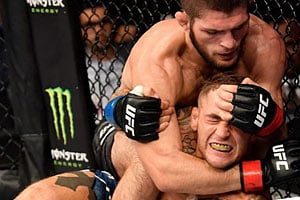
There is no universal best time to place a UFC bet. Betting early can help you secure an attractive price before it shortens, while waiting gives you more information before risking money.
The better choice depends on the current odds, your estimate of the fighter's win probability, and what important information is still pending. A fighter you like at +220 may no longer be attractive at +150 even though your opinion of the matchup has not changed.
Bet Early or Wait? The Short Answer
Your estimated fair price is clearly shorter than the available odds and you believe the current number may disappear.
Your edge is small or important information such as the official weigh-in is still pending.
| Situation | Usually Makes More Sense | Main Risk |
|---|---|---|
| You believe the current price clearly undervalues a fighter | Bet earlier | The price may improve later |
| You expect the market to shorten the price | Bet earlier | Late information may change the matchup |
| Your edge is small and important information is still pending | Wait | The price may move against you |
| You want to see official weigh-in results first | Wait | A good number may disappear |
Start With the Price, Not the Timing
Consider a hypothetical UFC moneyline:
A price of +240 corresponds to a raw implied probability of about 29.4%. A price of -300 corresponds to 75.0%.
The two raw implied probabilities total about 104.4%, creating an overround of approximately 4.4%. Overround describes how the complete market is priced. It should not be interpreted as the bookmaker's guaranteed profit.
When Betting Early Can Make Sense
Betting early is most defensible when your own analysis suggests that the available price is materially better than your estimate of fair odds and you believe that price may disappear.
Example: an underdog is available at +220, which has a raw implied probability of about 31.3%. Your analysis gives the fighter a 40% chance of winning, equivalent to fair odds of roughly +150.
If your estimate is sound, +220 provides a much larger cushion than +160 or +150. A shorter price can remove the value even if nothing about the fighter or matchup has changed.
You can test a probability estimate against an available price with the Expected Value Betting Calculator. The calculation is only as reliable as the probability estimate you enter.
When Waiting Until Fight Day Can Make Sense
Waiting is more reasonable when the current line offers little obvious edge or when information that could materially affect the matchup is still unavailable.
Before a UFC fight, relevant developments can include:
- official weigh-in results;
- a fighter missing the contracted weight;
- a replacement opponent;
- confirmed medical or bout-status news;
- other changes to the conditions of the fight.
The line can move in either direction, so waiting for more information may come at the cost of a less attractive number.
How UFC Weigh-Ins Affect Betting Timing
Official weigh-ins can provide information that was unavailable when the opening odds were posted. A missed weight, a change in the agreed conditions of a bout, or another confirmed development can cause bettors and sportsbooks to reassess the matchup.
Visual impressions deserve more caution. A fighter appearing tired, lean, relaxed, nervous, or intense for a few seconds on camera is not a reliable probability model by itself. Confirmed information is more useful than speculation based on photographs or short video clips.
How Much Should You Read Into Line Movement?
A change in UFC odds tells you that the market price has changed. It does not tell you with certainty why the price changed, and it does not prove which fighter will win.
Possible causes include new information, significant betting activity, changes at other sportsbooks, liquidity, and a sportsbook's own pricing or risk management. Sportsbooks do not necessarily try to balance every market perfectly.
For timing purposes, the practical question is simpler: if the price changes, does your original bet still offer value at the new number?
A UFC Betting Timing Example
Assume your analysis gives an underdog a 40% probability of winning. Fair decimal odds would be 2.50, equivalent to approximately +150 in American odds.
| Available Price | Raw Implied Probability | Compared With Your 40% Estimate |
|---|---|---|
| +220 | 31.3% | Large positive gap |
| +170 | 37.0% | Smaller positive gap |
| +150 | 40.0% | Approximately your fair price |
| +140 | 41.7% | Below fair value |
Nothing about the fighter has changed in this example. Only the price has changed. Yet the betting decision changes because the relationship between your probability estimate and the market price is different.
A Practical Four-Step Timing Process
Estimate the Matchup
Assess striking and grappling interactions, wrestling, cardio, pace, durability, physical differences, recent context, and other relevant matchup factors.
Convert Odds Into Probability
Calculate raw implied probability and compare it with your estimate. For a complete market, account for the overround.
Check What Is Still Pending
Consider whether weigh-ins, an opponent change, or another confirmed development could materially change your assessment.
Decide Whether to Take the Price
If the current line offers a meaningful edge and may shorten, betting earlier can make sense. A marginal price gives you less reason to rush.
Does Closing Line Value Matter for UFC Betting?
Closing line value, or CLV, compares the price you took with the price available near the start of the event. For example, taking +200 on a fighter who later closes at +160 means you secured a better number than the closing market offered.
CLV does not determine whether an individual bet wins and does not guarantee long-term profit. It is mainly useful as one way to review whether your timing process consistently produces favourable prices.
FAQ: When to Place UFC Bets
What is the best time to place a UFC bet?
There is no fixed best time. Betting early can make sense when the current price appears attractive and you expect it to shorten. Waiting can make sense when your edge is small or important fight information is still pending.
Should I bet UFC opening odds?
Only when the opening price itself justifies the bet. An early line is not automatically valuable simply because it was posted first.
Should I wait until after the UFC weigh-in?
Waiting can be reasonable when weigh-in information could materially affect your assessment of the matchup. The cost is that the price you wanted may change before the weigh-in is complete.
Does a shortening UFC line mean the fighter is more likely to win?
It means the market is offering a shorter price than before. That may reflect new information or betting activity, but line movement alone does not prove the reason for the move or the outcome of the fight.
Is a good fighter always a good bet?
No. Betting value depends on both the probability of winning and the available price. A fighter can be highly likely to win but still be unattractive if the odds are too short relative to that probability.
How can I judge whether I bet at the right time?
Record the price you took, the information available at the time, and the eventual closing price. Reviewing those decisions over many bets is more useful than judging the timing of a single bet by whether it won or lost.
Final Takeaway
The best time to place a UFC bet is when the available price gives you enough value relative to your estimate of the fighter's true chance of winning. Bet earlier when a favourable number may disappear; wait when important information is still pending and the current edge is small. Timing should change your price decision, not replace your analysis of the fight.
Betting involves risk. This article is for informational and educational purposes only and does not guarantee profitable outcomes.