
Boxing Betting Secrets: How to Analyse Fight Styles, Scoring and Odds
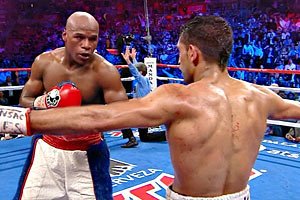
Records, knockout percentages and reputation can help describe a boxer, but they do not produce a fair price by themselves. A useful estimate must account for the specific matchup: range, stance, pace, scoring profile, durability, scheduled distance and realistic routes to victory.
Turn Boxing Fight Analysis Into Probabilities
The purpose of pre-fight analysis is not simply to identify the boxer you expect to win. It is to estimate how often each possible outcome would occur if the same matchup could be repeated under similar conditions.
If your conclusion is only “Fighter A should win”, you do not yet have enough information to assess a price. You need an estimated probability.
For example, a 50% estimate corresponds to fair odds of 2.00. A 60% estimate corresponds to approximately 1.67. A 40% estimate corresponds to 2.50.
Which Matchup Factors Should Affect Your Probability?
The inputs should describe how this particular fight is likely to develop rather than simply comparing career records.
Which boxer is more likely to keep the contest at the distance where their scoring is most effective?
Check how each boxer handles orthodox or southpaw positioning, lead-foot battles and rear-hand openings.
Separate sustainable output from early activity that may decline over a longer scheduled distance.
Look at what happens when the fighter is pressured, countered, forced backwards or trapped near the ropes.
Compare performances against opponents who presented similar tactical or physical problems.
Assess whether either boxer has a repeatable route to a stoppage rather than relying on career KO percentage alone.
A boxer with a strong record may still deserve a lower probability if the opponent presents a style the fighter has repeatedly struggled to solve. Conversely, previous losses are not automatically negative if they came against stronger opposition and revealed useful evidence about durability or competitiveness.
Scoring and Stoppage Uncertainty Must Be Priced In
A close winning round is commonly scored 10-9. Under ABC guidance, one knockdown combined with winning the round commonly produces a 10-8 score. A knockdown can therefore materially change the scorecards even when the rest of the contest is competitive.
Close rounds increase uncertainty
If the expected fight contains many difficult-to-separate rounds, your probability estimate should reflect greater decision uncertainty. A matchup in which one boxer is expected to create clearly superior scoring sequences is easier to price than a fight built around repeated marginal rounds.
Stoppage routes need a mechanism
Do not increase a knockout probability only because a fighter has a high historical KO percentage. Ask whether the opponent can actually be trapped at the relevant range, whether clean power is likely to land repeatedly, whether accumulated body work may reduce mobility, and whether the scheduled distance gives damage enough time to build.
Build Your Own Boxing Probability Estimate
For a three-way winner market, assign probabilities to Fighter A, Draw and Fighter B. The three estimates should total 100%.
Example: your pre-market estimate
| Outcome | Your probability | Your fair odds |
|---|---|---|
| Fighter A | 53% | 1.89 |
| Draw | 6% | 16.67 |
| Fighter B | 41% | 2.44 |
Total probability: 100%
These numbers are assumptions based on your fight analysis, not facts. The purpose of writing them down is to force the analysis into a testable price instead of leaving it as a vague opinion about who should win.
Do not start with the bookmaker price and work backwards. Seeing a strong favourite first can anchor your estimate. Build the fight case first, then compare it with the market.
Calculate the Market Probability and Overround
Now compare your estimate with a hypothetical complete three-way boxing market:
| Outcome | Decimal odds | Raw implied probability |
|---|---|---|
| Fighter A | 1.80 | 55.56% |
| Draw | 15.00 | 6.67% |
| Fighter B | 2.20 | 45.45% |
Total raw implied probability: 107.68%
Market overround: 107.68% − 100% = 7.68%
The total exceeds 100% because the displayed prices contain market overround. Raw implied probability is therefore a pricing measure, not an independent estimate of the true chance of each outcome.
Proportional no-vig estimate
One simple way to remove the overround is to divide each raw implied probability by the total market probability.
| Outcome | Raw implied | Proportional no-vig estimate | Equivalent fair odds |
|---|---|---|---|
| Fighter A | 55.56% | 51.59% | 1.94 |
| Draw | 6.67% | 6.19% | 16.15 |
| Fighter B | 45.45% | 42.21% | 2.37 |
Important: proportional normalization does not reveal the true probability of the fight. It is one method of estimating a margin-free market distribution. Your independent fight analysis is still required.
You can perform these calculations with the Odds2Win Implied Probability Calculator and Odds2Win Bookmaker Margin Calculator .
Compare Your Fair Odds With the Available Price
The market's proportional no-vig estimate for Fighter A is approximately 51.59%. Your own analysis estimated Fighter A at 53%.
That means your assessment is slightly more positive than the normalized market view. But this alone does not make odds of 1.80 attractive.
Why a likely winner can still be a poor price
Your Fighter A probability: 53%
Your fair odds: 1 ÷ 0.53 = approximately 1.89
Available odds: 1.80
Expected ROI = (estimated probability × decimal odds − 1) × 100At 53% probability and odds of 1.80:
(0.53 × 1.80 − 1) × 100 = −4.6%
Under your own probability assumption, 1.80 is therefore below your fair price and produces negative mathematical expected value.
If the same 53% estimate were paired with odds of 1.95, the calculation would instead be:
That does not guarantee a winning bet. It means only that a 1.95 price would be above your estimated break-even price of approximately 1.89 if the 53% probability estimate were accurate.
To compare an estimated probability with an available price, use the Odds2Win Expected Value Betting Calculator .
When the Correct Decision Is No Bet
A fight does not need to produce a bet. Passing is rational when the uncertainty in your estimate is larger than the apparent pricing difference.
- Limited footage: you cannot reliably compare the fighters against relevant styles.
- Late opponent change: the original analysis no longer describes the actual matchup.
- Unclear decision profile: too many expected rounds are difficult to separate confidently.
- Uncertain durability: the available evidence does not support a stable stoppage estimate.
- Price too short: the likely winner is offered below your own fair odds.
- Small estimated edge: minor modelling or judgement error could eliminate the apparent value.
The ability to estimate a winner and the ability to identify value are different skills. A correct fight prediction can still have been a poor decision at the available price.
Boxing Fair-Odds Workflow
-
Verify the fight conditions.
Confirm the opponent, scheduled rounds, weight and relevant late changes. -
Build the likely fight script.
Assess range, stance, pace, defensive reactions, durability and realistic routes to victory. -
Account for scoring uncertainty.
Decide whether the expected rounds should be clear or difficult to separate. -
Assign probabilities before checking the price.
In a three-way market, Fighter A + Draw + Fighter B should total 100%. -
Convert your probabilities to fair odds.
Fair odds equal 1 divided by the estimated probability. -
Calculate the complete market overround.
Include every available outcome rather than measuring only one price. -
Compare market and personal estimates.
Use proportional no-vig probabilities only as a market benchmark, not as true probabilities. -
Check expected value at the actual price.
If the available odds are shorter than your fair odds, the selection does not offer positive EV under your estimate.
Boxing Fair Odds FAQ
What are fair odds in boxing?
Fair odds are the decimal odds corresponding to an estimated probability without adding bookmaker margin. If you estimate a boxer has a 50% chance of winning, the corresponding fair odds are 2.00. At 40%, fair odds are 2.50.
Is a no-vig market probability the true probability?
No. Removing overround produces an estimate of how the market prices the outcomes without that margin. Proportional normalization is one possible method, but it does not establish the true probability of the fight.
Should the draw be included when calculating boxing overround?
Yes, when Draw is a listed outcome in the complete winner market. Overround should be calculated from every mutually exclusive outcome offered in that market. Ignoring the draw would make a three-way market calculation incomplete.
Can a favourite be correctly predicted but still be a bad bet?
Yes. A boxer can be the most likely winner while the available odds are still shorter than your fair price. Betting value depends on both probability and price, not on identifying the likely winner alone.
Related Boxing and Odds Resources
This page focuses on converting fight analysis into probability and fair price. Use the broader guides for market definitions and current fight previews.
Responsible gambling: This content is for informational and educational purposes only. Probability estimates can be wrong, betting involves financial risk, outcomes are not guaranteed, and losses should never be chased by increasing stakes.