
Tote Placepot: How It Works, Place Terms & Permutations
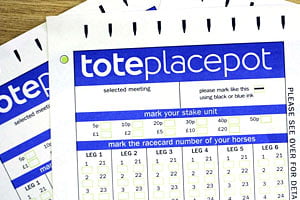
A standard Tote Placepot asks you to find a placed horse in each of six races. Because it is a pool bet, the final dividend depends on how many successful units survive, while extra selections multiply the cost of the ticket.
Contents
How the Tote Placepot Works
Six legs, place terms, permutations, non-runners and pool dividends
A standard Tote Placepot asks you to select at least one horse to place in each of the first six races at a UK or Irish meeting. You do not need six winners: every selection only has to satisfy the place terms for its own race.
The Placepot is a pool bet. Stakes from participating customers are combined, deductions are applied under the pool rules, and the remaining pool is divided among successful units. That means there is no fixed return when you place the bet.
Pool betting
Multiple selections allowed
Dividend varies
1. What Counts as a Place?
For a standard UK Placepot, the number of qualifying places depends on the field and race type. Tote’s published guide uses these standard terms:
- 4 runners or fewer: win only.
- 5–7 runners: first and second.
- 8 or more runners: first, second and third.
- Handicap with 16 or more runners: first through fourth.
Place terms are set race by race. A late withdrawal can reduce the field enough to change how many finishing positions qualify.
International World Pool races can use different place terms from standard UK Placepot rules, so always use the place terms displayed for that specific pool.
2. One Horse per Leg vs Multiple Selections
You can select more than one horse in any leg. This creates additional combinations, usually called permutations. More coverage increases your chance of surviving a difficult leg, but it also increases the total cost.
Permutation example
Suppose your six legs contain:
- Leg 1: 2 selections
- Leg 2: 3 selections
- Leg 3: 2 selections
- Leg 4: 1 selection
- Leg 5: 1 selection
- Leg 6: 2 selections
Total combinations = 2 × 3 × 2 × 1 × 1 × 2 = 24 lines.
If your unit stake is £0.50, the total stake is 24 × £0.50 = £12. The same logic applies regardless of the horses chosen: every extra selection multiplies the number of lines.
3. How the Placepot Dividend Is Calculated
Unlike a fixed-odds accumulator, a Placepot does not lock in a price for each horse. The final return is a pool dividend. After the final leg, the distributable pool is divided by the number of successful units that remain.
That is why a meeting full of short-priced favourites placing can produce a very different dividend from a meeting where several heavily supported runners fail to qualify.
A large pool does not automatically mean a large return. What matters is the relationship between the size of the distributable pool and the number of winning units.
4. Why Popular Selections Matter in a Pool Bet
In fixed-odds betting, the quoted price tells you the market’s current assessment. In a Placepot, the important concept is pool ownership: how much of the surviving pool is attached to each horse.
If an odds-on favourite is carried on a very high proportion of tickets and it places, many units survive. If that horse misses the places, a large part of the pool can be eliminated at once.
This does not mean that opposing favourites is automatically correct. A strong favourite can still be the most sensible selection. The strategic question is whether using a banker gives you enough survival probability relative to how heavily the same horse is likely to be represented in the pool.
5. What Happens to a Non-Runner?
A Placepot non-runner is not handled like a normal fixed-odds single. Under Tote rules, a non-running selection is replaced by the relevant favourite according to the pool’s substitution procedure.
For UK races, the substitute is normally the starting-price favourite. If there are joint or co-favourites, the lower racecard number is used under the published Tote rules.
This matters because several tickets can become concentrated on the same substitute after withdrawals. It can materially change how many units survive the leg.
6. What If a Placepot Leg Is Abandoned or Void?
Tote rules provide that if a Placepot leg is a walkover, void, abandoned or has no official result and is not re-run on the same day, the pool can be settled on the remaining legs. Every selection in the affected leg is treated as successful, provided at least one leg of the bet takes place.
If none of the Placepot legs take place, the pool is void and stakes are refunded.
This is an important difference from thinking of the Placepot as six independent fixed-odds bets. It is one pool product governed by its own multi-leg settlement rules.
7. Building a Sensible Placepot Ticket
Before adding extra horses, sort the six races into three practical groups:
- Banker leg: one horse you are comfortable relying on to place.
- Coverage leg: a competitive race where two or three selections materially improve survival probability.
- Value leg: a race where you believe a less popular runner has a realistic place chance.
Trying to cover every plausible horse usually turns a modest ticket into an expensive one. Use extra selections where the race is genuinely uncertain and keep stronger opinions narrow.
Calculate the number of permutations before submitting the bet. A small change from two to three selections in one leg can increase the total stake by 50%.
8. Where Placepot Tickets Usually Go Wrong
- Assuming every race pays three places. Place terms vary with field size and race type.
- Ignoring late non-runners. Withdrawals can change both place terms and substitution outcomes.
- Adding selections without calculating cost. Permutations multiply rather than add.
- Confusing pool value with fixed odds. You do not know the final dividend when you place the bet.
- Using a banker only because it is favourite. A favourite can be a logical banker, but price rank alone is not analysis.
- Assuming a huge pool guarantees a huge payout. The number of surviving units is equally important.
Worked Ticket Example
Consider a fictional six-race card:
- Leg 1: Horse A, Horse B
- Leg 2: Horse C
- Leg 3: Horse D, Horse E
- Leg 4: Horse F, Horse G, Horse H
- Leg 5: Horse I
- Leg 6: Horse J, Horse K
The ticket contains 2 × 1 × 2 × 3 × 1 × 2 = 24 combinations.
At a £0.25 unit stake, the total cost would be £6. To remain alive after all six legs, at least one of your selected horses must satisfy the relevant place terms in every leg.
If more than one of your selections places in a leg, multiple lines can remain alive. That can leave you holding more than one successful unit at the end, depending on the ticket structure.
FAQ: Tote Placepot
How many races are in a standard Placepot?
A standard Placepot covers six races. Tote also offers separate products such as Placepot7, but that is a different pool format.
Do all six horses have to win?
No. You need at least one selected horse to satisfy the place terms in each of the six legs.
Can I select more than one horse in a leg?
Yes. Multiple selections create permutations and increase the cost of the ticket according to the number of combinations.
What happens if my selection is a non-runner?
Tote substitution rules apply. In a standard UK Placepot, the non-runner is normally replaced by the starting-price favourite, with tie-breaking rules for joint favourites.
Is the Placepot a fixed-odds bet?
No. It is a pool bet, so the final dividend depends on the distributable pool and the number of successful units.