
Horse Racing Betting Rules: Non-Runners, Rule 4 & Dead Heats
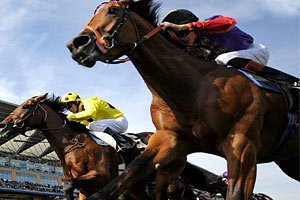
Horse racing bets are settled by the rules of the market, not simply by what appears to happen on the track. Non-runners, Rule 4 deductions, dead heats, each-way terms and the official result can all change the amount returned.
Contents
Horse Racing Betting Rules Explained
Non-runners, Rule 4, dead heats, each-way terms and race settlement
Horse racing bets are settled according to the rules of the market you entered, not simply by what appeared to happen on the track. The most important issues are whether your horse started, which result is treated as official, whether a non-runner changed the market, and which place terms applied when the bet was struck.
The examples below use common UK-style fixed-odds and Tote rules. Other jurisdictions and operators can settle the same situation differently, so the market terms still control the final payout.
Rule 4 deductions
Dead heats
Each-way settlement
1. The Official Result Is What Settles Most Bets
For ordinary fixed-odds horse racing bets, settlement normally follows the official result under the applicable betting rules. A horse crossing the line first does not always mean every bet is immediately final. A stewards’ inquiry, objection or disqualification can alter the placings before the official result is confirmed.
That distinction matters because bookmakers can also offer concessions such as “first past the post”. Those are operator-specific promotions, not the underlying racing rule. If no such concession applies, the normal settlement basis should be the official result defined in the bookmaker’s published rules.
Do not treat the provisional finish shown on television as the final betting result when an inquiry or objection is in progress.
2. What Happens When Your Horse Is a Non-Runner?
For a standard day-of-race fixed-odds win bet, a horse that is officially withdrawn before taking part is generally treated as a non-runner and the stake on that selection is returned. The remaining market can then be subject to a deduction because the withdrawal changes the chances of the horses that are still running.
Ante-post betting is different. In traditional ante-post markets, “all in, run or not” terms may apply, which means a stake can be lost if the selected horse does not start. The precise treatment depends on the market and the operator’s published terms, so ante-post and day-of-race bets should never be assumed to have identical non-runner rules.
Pool betting is different again. In a Tote Placepot, for example, a non-runner selection is normally replaced under the pool’s substitution rules rather than simply refunded as an individual leg.
3. Rule 4: Why a Withdrawal Can Reduce Your Winnings
Rule 4 is the best-known UK horse racing deduction for non-runners. Its purpose is to adjust winning bets when a horse is withdrawn after prices have already been formed. Removing a runner—especially a short-priced one—makes the remaining horses mathematically more likely to win, so the original odds can become too generous for the smaller field.
The deduction is determined by the price of the withdrawn horse, not the price of the horse you backed. A short-priced withdrawal produces a larger deduction than a long-priced withdrawal because it removes more probability from the market.
Worked Rule 4 example
Suppose you stake £10 at 5.00 decimal odds. Before the race, another horse is withdrawn and the applicable Rule 4 deduction is 20p in the pound.
- Gross winnings before deduction: £10 × (5.00 − 1) = £40.
- Rule 4 deduction: £40 × 20% = £8.
- Adjusted winnings: £40 − £8 = £32.
- Total return including the original £10 stake: £42.
The deduction applies to the winnings portion, not by simply removing 20% of the entire return.
Rule 4 tables and operator concessions can differ in presentation, so check the actual deduction shown in the market or the bookmaker’s current rules before calculating a settlement.
4. How Dead-Heat Bets Are Settled
A dead heat occurs when the official result cannot separate two or more horses for the same finishing position. In fixed-odds betting, the normal settlement method is to divide the stake by the number of horses involved in the dead heat and settle that part at the full odds.
Two-way dead heat example
You back a horse with £10 at 6.00, and it dead-heats for first with one other horse. Half of your stake is treated as the winning portion:
- £5 wins at 6.00 = £30 return.
- The other £5 is the losing portion of the original stake.
- Total returned from the £10 bet = £30.
A three-way dead heat would normally divide the stake into thirds. Place and each-way bets can also be affected when a dead heat occurs at the final qualifying place.
5. Each-Way Betting: Two Bets, Two Settlements
An each-way bet is really two equal bets: one on the horse to win and one on the horse to place. A “£10 each-way” bet therefore costs £20 in total.
The win part is settled at the full quoted odds. The place part is settled at a fraction of those odds—commonly one-quarter or one-fifth—using the number of places specified for that race and market.
Worked each-way example
Assume £10 each-way at 9.00 decimal odds, with place terms equivalent to one-quarter of the fractional win odds for three places. Decimal 9.00 equals 8/1, so the place odds are 2/1, or 3.00 decimal.
- If the horse wins, the £10 win part returns £90 and the £10 place part returns £30.
- Total return = £120 from a £20 total stake.
- If the horse finishes second or third, only the £10 place part wins, returning £30.
Before placing an each-way bet, confirm both the number of places and the fraction used for the place return. Promotional extra-place offers are separate from the standard terms.
6. What If a Race Is Abandoned, Void or Not Run?
If a race never takes place, ordinary fixed-odds bets on that race are usually void and stakes are returned, subject to the bookmaker’s rules and whether the race is rescheduled within a defined period.
Multi-leg pool bets can work differently. Tote rules for Placepot provide that if a leg is a walkover, void, abandoned or has no official result and is not re-run on the same day, the pool can be settled on the remaining legs, with selections in the affected leg treated as successful, provided at least one leg takes place.
This is why “abandoned race = every bet refunded” is too broad. Settlement depends on the product: a single fixed-odds bet, an accumulator, an ante-post market and a pool bet can all be treated differently.
7. Fixed Odds and Pool Betting Do Not Use the Same Logic
In a fixed-odds bet, you accept a quoted price and the potential return is known when the bet is placed, subject to deductions or settlement rules.
In pool betting, stakes are combined into a pool. The final dividend depends on the pool rules, deductions and how many winning units remain. The price is therefore not fixed in the same way when the bet is placed.
This difference is especially important for Tote Placepot and similar bets, where non-runners, abandoned legs and dividends follow the pool’s own rules rather than ordinary bookmaker settlement.
8. Different Jurisdictions Can Use Different Rules
There is no single worldwide settlement rulebook for every horse racing bet. UK fixed-odds racing, US pari-mutuel betting, Australian tote markets and international World Pool races can differ in terminology, deductions, place terms and non-runner treatment.
Even within the same country, the underlying racing rules and the bookmaker’s customer terms are not the same thing. Racing authorities determine the official race result; betting operators define how the relevant market is settled around that result.
Before placing a bet, check the market type, each-way terms, non-runner policy, settlement basis and whether any special promotion overrides the standard terms.
Before You Settle a Bet, Check These Seven Things
- Did the horse start? If not, check whether the bet was day-of-race, ante-post or part of a pool.
- Was another horse withdrawn? A Rule 4 or similar deduction may affect winnings.
- Was there an inquiry? Wait for the official result used by the market.
- Was it each-way? Confirm the place fraction and number of places.
- Was there a dead heat? The stake may be divided for settlement.
- Was the race abandoned? Check the product-specific rule rather than assuming every wager is treated identically.
- Was it a pool bet? Pool substitution and dividend rules can differ from fixed odds.
FAQ: Horse Racing Betting Rules
What happens if my horse is a non-runner?
For many standard day-of-race fixed-odds bets, the selection is void and the stake is returned. Ante-post and pool bets can use different rules, so the market terms matter.
Does Rule 4 reduce my stake?
Rule 4 is normally applied to the winnings portion of an affected fixed-odds bet. The original stake is then added back when the final return is calculated.
How is a two-horse dead heat settled?
The stake is normally divided by two, with one half settled as a winner at the full odds and the other half treated as the losing portion.
Does a stewards’ inquiry change a bet?
It can. Standard settlement normally uses the official result under the applicable betting rules, although some operators offer separate first-past-the-post concessions.
Is a £10 each-way bet a £10 total stake?
No. A £10 each-way bet consists of a £10 win bet and a £10 place bet, so the total stake is £20.