

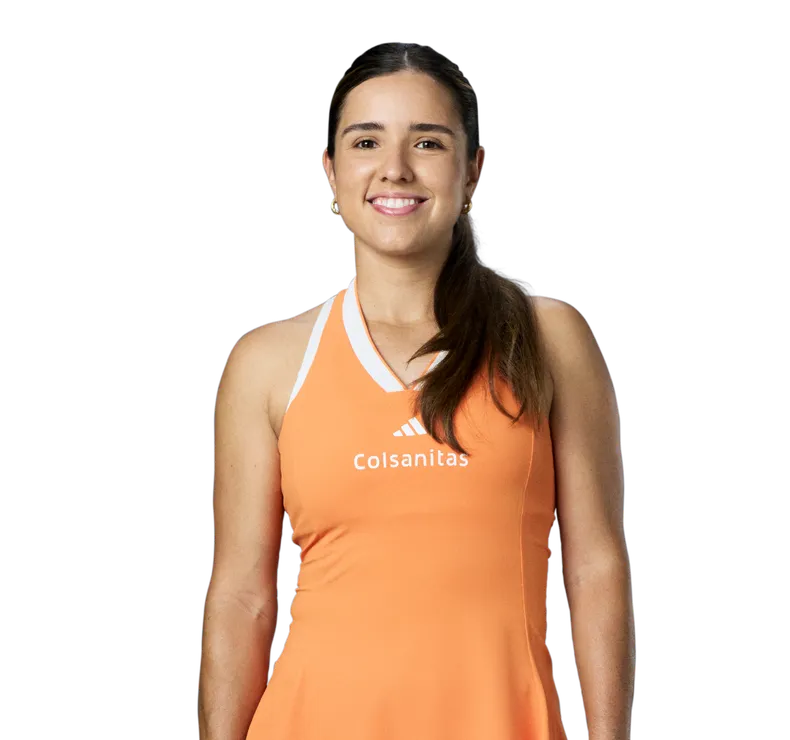
Match snapshot
Coco Gauff vs Camila Osorio
WTA Beijing — Round of 64
Outdoor hard
NO BET
No recommended market
Low
Coco Gauff is ranked No. 4, has won four of her latest five completed singles matches and reached the US Open semifinals after winning Cincinnati. Camila Osorio is ranked No. 66 and ended a four-match losing run only in her opening Beijing match.
Gauff received a first-round bye and has not yet played a competitive match in Beijing, while Osorio already has a straight-sets win on these courts and showed useful return pressure in that victory.
Quick verdict
Coco Gauff is the clear directional lean, but the official pre-match decision is NO BET. Gauff brings the stronger ranking and recent hard-court results, including a Cincinnati title and a US Open semifinal run. Osorio arrives with only one win from her latest five matches, although that victory was a controlled 6–3, 6–3 result over Lanlana Tararudee in Beijing. The evidence makes Gauff the more likely winner, but it does not independently justify forcing a match-winner, straight-sets, handicap or totals selection.
Match context
Coco Gauff and Camila Osorio meet in the second round of the WTA 1000 China Open at the National Tennis Center in Beijing. Gauff received a first-round bye, while Osorio advanced through the opening round by defeating Lanlana Tararudee in straight sets.
Fitness and availability
Recent evidence
The comparison uses each player's latest five completed singles matches before this meeting.
- Lost to Elena Rybakina — 6–3, 4–6, 4–6
- Beat Mirra Andreeva — 2–6, 7–6, 6–2
- Beat Iva Jovic — 6–1, 6–4
- Beat Cristina Bucsa — 6–3, 6–4
- Beat Paula Badosa — 6–4, 7–6
Five-match record: 4 wins and 1 defeat.
- Beat Lanlana Tararudee — 6–3, 6–3
- Lost to Aryna Sabalenka — 2–6, 4–6
- Lost to Ann Li — 1–6, 2–6
- Lost to Taylor Townsend — 6–3, 3–6, 3–6
- Lost to Ekaterina Alexandrova — 3–6, 6–7
Five-match record: 1 win and 4 defeats.
Osorio's Beijing opener
- Won 6–3, 6–3
- Converted 5 of 10 break points
- Won 5 return games
- Won 67% of second-serve points
- Faced 6 break points
- Was broken twice
- Held 7 of 9 service games
- Hit no aces and 3 double faults
Expected match script
Scenario: Gauff has the stronger overall baseline and the more convincing recent hard-court results, but Osorio's first-round return numbers suggest she should not be treated as a passive opponent. The key question is whether Osorio can protect her own serve well enough to make her return pressure matter.
The favourite's route becomes significantly cleaner because Osorio would need to win two consecutive sets after entering the match with only one victory from her previous five outings.
The upset scenario becomes much more credible. Gauff would need to chase from behind, and Osorio's return pressure could become more important if the favourite starts taking additional risks on serve.
Break-point efficiency becomes increasingly important. Osorio converted half of her opportunities against Tararudee, while a few missed chances could be costly against an opponent with Gauff's recent results.
Why there is no recommended selection
Meaning: the winner forecast clearly favours Gauff.
Market: a strong favourite forecast alone does not establish that a specific betting selection is justified.
Meaning: her current hard-court results provide a much stronger performance baseline than Osorio's recent sequence.
Market: this supports the favourite in winner scenarios but does not by itself prove a straight-sets or game-handicap position.
Meaning: she has a credible return route into the match, while her own service games remain a potential pressure point.
Market: the same evidence can support both a comfortable-Gauff scenario and a more competitive match if Osorio returns well.
Meaning: direct matchup evidence and tournament-specific form for the favourite are limited.
Market: the available evidence identifies the more likely winner more clearly than it identifies the best betting market.
What can make the prediction fail?
- First-match adjustment: Gauff received a bye, so this is her first competitive match on the Beijing courts during this edition of the tournament.
- Osorio's return threat: five breaks against Tararudee show that the Colombian can create repeated pressure when an opponent's service level drops.
- Gauff service variance: her serve was broken four times in the US Open semifinal. A similar period of instability would give Osorio a more realistic route into the match.
- No head-to-head sample: the players have never met professionally, so there is no direct evidence for how their specific patterns interact.
- Short-match variance: in best-of-three tennis, one early break or a poor service game can materially change the first-set state and increase pressure on the favourite.
A verified late fitness development or new match-specific information that materially changes the expected serve-return balance would justify another review before play begins.
Recommended market
No recommended market
NO BET
Coco Gauff
Low
Gauff has the stronger evidence in ranking, recent form and hard-court results, making her the more likely winner. Osorio's straight-sets Beijing opener and five converted breaks give the underdog a genuine route to create pressure, while the lack of previous H2H evidence and Gauff's first-match adjustment make an aggressive straight-sets or handicap conclusion less secure. The preferred betting decision is therefore to avoid forcing a market.
Final verdict
Prediction: NO BET, with a clear directional lean toward Coco Gauff. Gauff's recent hard-court record is substantially stronger, and her Cincinnati title and US Open semifinal run provide the best evidence in the matchup. Osorio deserves credit for ending her losing streak with a 6–3, 6–3 Beijing win and showed useful return pressure in that match, but she still faces the more difficult route. Gauff is the more likely winner; the betting recommendation remains NO BET.
NO BET
No recommended market
Coco Gauff
Osorio return pressure and first-match adjustment
Low
FAQ
What is the Coco Gauff vs Camila Osorio prediction?
The official decision is NO BET, with a clear directional lean toward Coco Gauff because of her stronger ranking and recent hard-court results.
Why is Gauff the likely winner?
Gauff is ranked No. 4, has won four of her latest five completed matches, won Cincinnati and reached the US Open semifinals. Osorio is ranked No. 66 and has one win across her latest five.
What is Osorio's best route to an upset?
Her return game is the clearest route. Osorio converted five break points against Tararudee and needs to create similar pressure while protecting her own serve more consistently.
Have Gauff and Osorio played before?
No. This is their first recorded professional meeting, so there is no direct head-to-head sample to use in the prediction.