
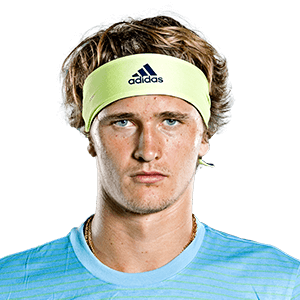

Match snapshot
Alexander Zverev vs Juncheng Shang
ATP Beijing — Round of 16
Outdoor hard
NO BET
No recommended market
Low
Alexander Zverev has the clearly stronger recent profile, is ranked No. 2 in the world and reached this round with a straight-sets win in which he did not lose serve. Juncheng Shang needed three sets to advance and has won only one of his latest five matches.
Shang broke serve six times in his opening Beijing victory and has no previous head-to-head history with Zverev, leaving more matchup uncertainty than the ranking gap alone suggests.
Quick verdict
Alexander Zverev is the clear directional lean, but the official pre-match decision is NO BET. Zverev has won four of his latest five matches and opened his Beijing campaign by beating Cameron Norrie in straight sets. His first-round serving numbers were particularly strong: 15 aces, no double faults, all 11 service games held and all three break points saved. Shang produced a valuable comeback win over Sebastián Báez, but his broader recent form is weaker and his own serve was broken four times in that match.
Match context
Alexander Zverev and Juncheng Shang meet in the men's singles Round of 16 at the ATP 500 China Open in Beijing. The tournament is played on outdoor hard courts at the National Tennis Center, and both players came through their opening matches in Beijing before this encounter.
Fitness and availability
Recent evidence
The comparison below uses each player's latest five completed singles matches before this Round of 16.
- Beat Cameron Norrie — 7–6, 6–4
- Beat Learner Tien — 7–6, 6–3
- Lost to Alex de Minaur — 6–2, 6–7, 9–11 match tie-break
- Beat Dino Prižmić — 6–2, 6–4
- Beat Matej Dodig — 6–4, 7–6
Five-match record: 4 wins and 1 defeat.
- Beat Sebastián Báez — 5–7, 6–3, 7–5
- Lost to Adrian Mannarino — 6–7, 2–6
- Lost to Marco Trungelliti — five sets
- Lost to Lorenzo Sonego — 3–6, 3–6
- Lost to Luciano Darderi — 6–4, 1–6, 4–6
Five-match record: 1 win and 4 defeats.
Opening-round serve and return evidence
- 15 aces
- 0 double faults
- 76% first serves in
- 77% of first-serve points won
- 75% of second-serve points won
- 11 of 11 service games held
- 3 of 3 break points saved
- 3 aces
- 2 double faults
- 63% first serves in
- 63% of first-serve points won
- 58% of second-serve points won
- 12 of 16 service games held
- 6 return games won
Expected match script
Scenario: the clearest path points toward Zverev using his serve to protect his own games and placing repeated pressure on Shang's service games. Shang's upset route is to turn the match into a more return-heavy contest, create break-point opportunities and prevent Zverev from settling into the clean serving rhythm he showed against Norrie.
The favourite's route becomes substantially cleaner: Shang would need to win two consecutive sets while also finding a way through a serve that was not broken in Zverev's opening match.
The upset scenario becomes far more credible. Zverev would be forced to chase the match, while Shang could use the scoreboard advantage to increase pressure in the German's return games.
Tiebreak variance becomes more important. Zverev won a first-set tiebreak against Norrie, but a single mini-break can materially change a short best-of-three match.
Why there is no recommended selection
Meaning: recent results strongly favour Zverev as the more likely match winner.
Market: this establishes a directional lean, but a likely winner is not automatically a recommended bet.
Meaning: his serve provides a clear structural advantage if that level carries into this match.
Market: it supports Zverev in match-winner and set-based scenarios without proving that one specific market offers sufficient betting justification.
Meaning: the Chinese player showed enough return quality and resilience to make a completely one-sided assumption unsafe.
Market: that increases the risk of forcing an aggressive straight-sets or handicap position.
Meaning: the ranking and form gap is clear, but some matchup variables remain untested.
Market: the evidence supports Zverev as the likely winner more strongly than it supports a specific recommended betting market.
What can make the prediction fail?
- Shang's return threat: six breaks against Báez show that he can create repeated pressure on an opponent's serve. An early Zverev service dip would materially change the expected script.
- Tiebreak variance: Zverev's opening set against Norrie required a tiebreak. If service games dominate again, a handful of points can decide an entire set.
- No head-to-head sample: Zverev and Shang have not previously played, so there is no direct evidence for how their serve patterns and baseline exchanges interact.
- Shang's first-round recovery: he came from a set down against Báez and won a close deciding set. That result is evidence that he can remain competitive when the match becomes extended.
- Schedule and load: Zverev arrived in Beijing after a busy hard-court period and acknowledged the quick recovery challenge before his opening match, even though he reported being satisfied with his level afterwards.
A verified late fitness development for either player, or new match-specific evidence that materially changes the expected serve-return balance, would justify a fresh review before the match begins.
Recommended market
No recommended market
NO BET
Alexander Zverev
Low
The tennis evidence points clearly toward Zverev: stronger recent form, a major ranking advantage and a significantly cleaner serving performance in the opening round. Shang's ability to generate six breaks against Báez prevents the matchup from being treated as automatic, and the available evidence supports a winner forecast more strongly than it supports a specific betting selection.
Final verdict
Prediction: NO BET, with a strong directional lean toward Alexander Zverev. Zverev enters with the superior recent record and produced a high-level serving performance against Norrie, holding every service game and facing very little scoreboard pressure. Shang deserves respect after his comeback against Báez and showed genuine return threat, but his recent results and first-round service numbers leave him with the more difficult path. Zverev is the more likely winner, while the betting recommendation remains NO BET.
NO BET
No recommended market
Alexander Zverev
Shang's return threat and tiebreak variance
Low
FAQ
What is the Alexander Zverev vs Juncheng Shang prediction?
The official decision is NO BET, with Alexander Zverev as the clear directional lean based on recent form, ranking and first-round serving performance.
Why is Zverev the likely winner?
Zverev has won four of his latest five matches and did not lose serve against Cameron Norrie, producing 15 aces and saving all three break points he faced.
What is Shang's best route to an upset?
Shang needs to create regular pressure in Zverev's service games. He broke Sebastián Báez six times in the previous round, so his return performance is the clearest route to changing the expected match script.
Have Zverev and Shang played before?
No. This is their first recorded professional meeting, so there is no direct head-to-head evidence to use in the prediction.