
What Is Harness Racing?
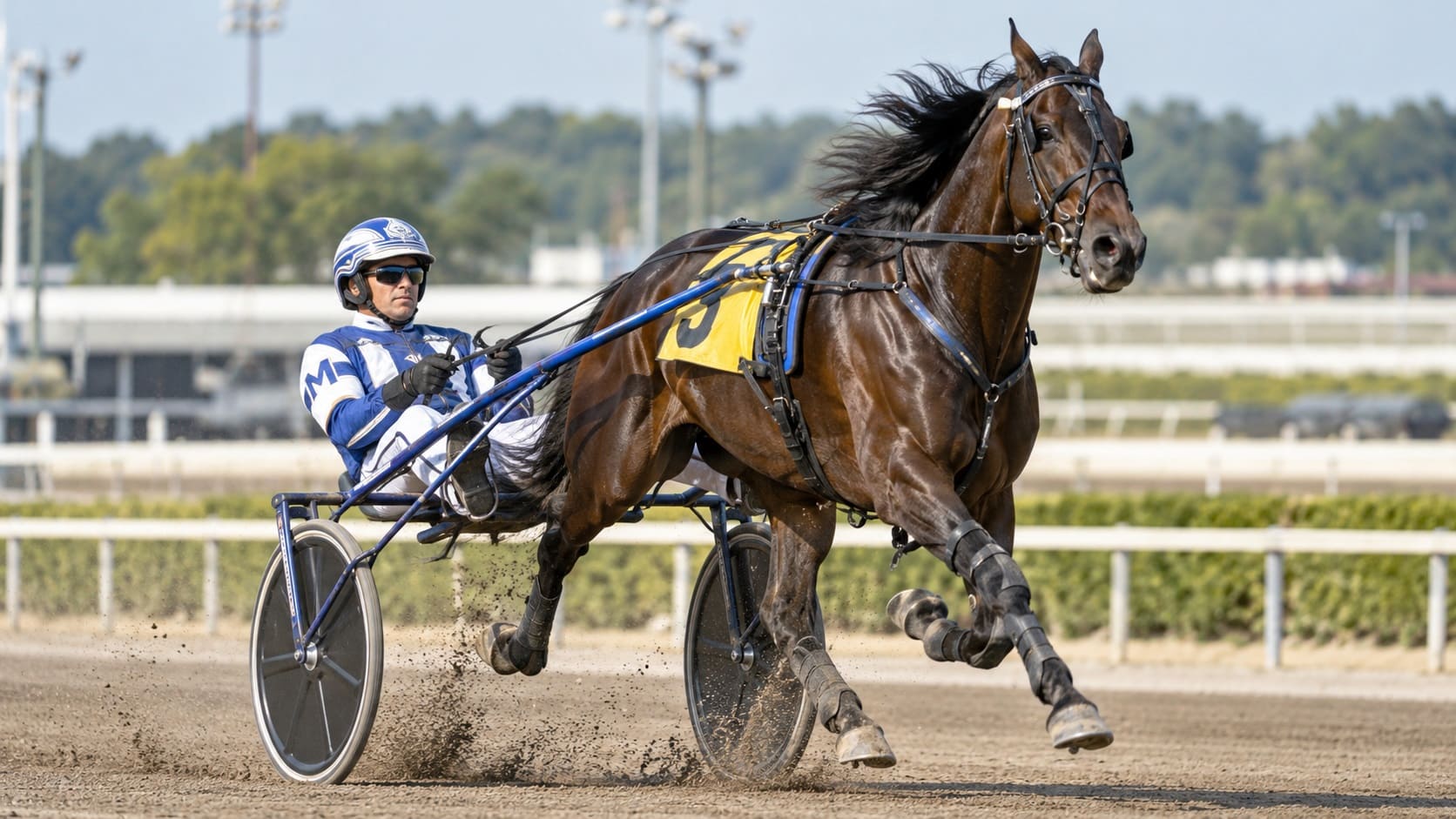
Harness racing is horse racing in which a horse pulls a lightweight two-wheeled cart called a sulky while competing at a prescribed gait: the trot or the pace. The person in the sulky is called a driver, not a jockey. Most harness racing is associated with Standardbred horses, although other trotting breeds are used in some parts of the world.
Contents
Harness racing is as much about position and gait control as outright speed. A horse can have enough ability to win and still lose after using too much energy early, racing without cover, becoming trapped behind another horse or breaking from its gait.
Those differences matter to spectators and bettors because the finishing order alone does not always tell you which horse produced the strongest performance.
How Harness Racing Works
Harness races are usually held on oval tracks. The horse is attached to a sulky, sometimes called a racebike, and the driver sits behind it.
Many races use a mobile starting gate. Horses line up behind the wings of a moving vehicle and approach the start together. The vehicle accelerates away as the field reaches the starting point.
Standing starts are also used in some jurisdictions and race formats. Because starting procedures vary, the conditions of the specific race matter more than any single universal rule.
Once the race begins, drivers have to decide how aggressively to use their horse. They may leave quickly to secure the lead, take a position behind another runner, move outside with cover or wait for clear racing room later.
A strong harness-racing performance is not just a fast final time. The route the horse took to produce that time — including position, cover, traffic and gait reliability — can be just as important.
Trot vs Pace: What Is the Difference?
Trotters and pacers are separated by the way their legs move. Both are harness horses, but the gait is different.
Trot
A trotter moves its legs in diagonal pairs. The right front and left rear move together, followed by the left front and right rear.
If you watch from the side, the movement appears diagonal across the horse's body.
Pace
A pacer moves the legs on the same side of its body together. The two right-side legs move as a pair, followed by the two left-side legs.
This produces the distinctive side-to-side action associated with pacing.
Pacing is especially prominent in North American, Australian and New Zealand harness racing. Trotting is dominant in several major continental European racing jurisdictions.
Do Pacers Have to Wear Hobbles?
No. Many pacers wear pacing hobbles, but not every pacer does. The hobbles connect the legs on each side and help the horse maintain its pacing rhythm at racing speed.
A pacer that races without hobbles is commonly described as free-legged. Trotting hobbles also exist, so hobbles should not be described as equipment used exclusively by pacers.
The equipment supports a gait the horse already possesses; it does not turn a non-pacing horse into a pacer.
What Happens When a Horse Breaks Gait?
A horse is said to break or go off-stride when it loses its prescribed trot or pace, often by moving into a gallop.
A break is important, but it does not automatically mean the horse is disqualified. The exact consequences depend on the racing authority and what happens during the break.
Under USTA rules, for example, a driver must attempt to return the horse to its programmed gait and, where clearance exists, move inside or outside while the horse is off-stride. A horse must not gain ground or an unfair advantage from the break. An extended break or another rule violation can affect the horse's placing.
For form analysis: check how often a horse breaks, when the breaks occur and how much ground is lost. A fast but unreliable horse carries a different risk from a slightly slower horse that stays on gait consistently.
What Is a Sulky?
A sulky is the lightweight two-wheeled racing vehicle attached behind the horse. The driver sits low between the wheels while shafts extend forward along the sides of the horse.
The sulky affects the way a race develops. A horse-and-sulky combination needs clear space to move, so being boxed behind another runner or caught wide can be particularly costly.
That is one reason harness-racing form should be read with the horse's trip in mind rather than from the finishing position alone.
What Is a Standardbred?
The Standardbred is the breed most closely associated with modern harness racing, particularly in North America.
The breed developed during the 19th century from horses selected for their ability to trot or pace at useful speed over distance. The name is connected with the performance standards used in the early development of the breed registry.
Standardbreds can be trotters or pacers. These are gaits, not two separate horse breeds.
Harness Racing vs Thoroughbred Racing
The differences change the way past races should be assessed. A flat-racing handicapper moving into harness racing has to pay much more attention to gait, post position, cover and the way the field is likely to arrange itself.
Why Post Position Matters
A horse's starting position can shape its race before the field reaches the first turn.
An inside horse may be able to hold a useful position without using excessive early speed. A horse drawn wider may need to accelerate hard to move across, remain outside or drop back in search of cover.
None of those outcomes is automatically good or bad. Much depends on the horse's early speed, the track layout and the other runners in the field.
Post position should therefore be assessed together with the likely race shape, not as an isolated statistic.
What Do “Cover,” “Pocket” and “Parked Out” Mean?
Harness racing has its own vocabulary for race position.
- Cover: racing behind another horse on the outside, which can shelter a runner from doing all the work itself.
- Pocket: a position directly behind the leader, usually on the inside.
- Parked out: racing on the outside without securing an economical position, sometimes for a significant part of the race.
- First over: the first horse advancing on the outside without another horse providing cover in front of it.
These details help explain why two horses with similar finishing times may have produced very different performances.
How to Analyze a Harness Race
Do not judge a harness horse by its finishing position alone. Start with these six factors.
Gait and Reliability
Establish whether the race is a trot or a pace and check the horse's recent record for breaks or rough-gaited performances.
Class
Compare the quality of today's opposition with the fields the horse has faced recently. A class drop can matter more than an unattractive last-place finish.
Post Position and Early Speed
Work out where the horse is likely to be after the start. A wide draw is less damaging for a horse with enough speed to secure position efficiently.
Previous Trip
Check whether the horse raced with cover, was parked out, became boxed in, encountered interference or used too much energy early.
Driver and Trainer
Driver decisions can affect position and timing, while trainer changes or stable form may provide useful context. Neither should be evaluated in isolation.
Expected Race Shape
Identify the likely leader, horses that may challenge early and runners looking for cover. Then consider which horses are most likely to receive an efficient trip.
How to Read Harness-Racing Form More Accurately
Past-performance lines contain more information than the finishing position. Useful details can include the horse's post position, intermediate positions, fractional race times, driver, track condition and notes indicating problems such as breaks or difficult trips.
A fifth-place horse that was parked out for much of the race may have produced a better effort than a third-place horse that saved ground behind the leader. Conversely, an impressive-looking finishing position can flatter a runner that received an unusually easy trip.
This is why race replays and detailed past-performance information can be more informative than a simple sequence of finishing numbers.
Harness Racing Around the World
Harness racing does not use one identical format everywhere.
North American racing features both pacers and trotters and frequently uses mobile starts. Pacing is also an important part of harness racing in Australia and New Zealand. In several major continental European jurisdictions, trotting is the dominant form.
Race distances, track sizes, start types, equipment rules and penalties can vary by racing authority. When analyzing a race outside a familiar jurisdiction, checking the local rules is part of the handicapping process.
Betting on Harness Racing
Harness racing offers many of the same basic wager types found elsewhere in horse racing. The exact markets and settlement rules depend on the track, tote or bookmaker.
- Win: the selected horse must finish first.
- Place: settlement depends on the stated placing rules.
- Show: available in some jurisdictions and pools.
- Exacta: select the first two finishers in the correct order.
- Trifecta: select the first three finishers in the correct order.
- Multi-race wagers: combine selections from more than one race.
Winning Chance Is Not the Same as Betting Value
The horse most likely to win is not automatically a good bet. A price can be too short even when the horse deserves to be favourite. Betting analysis should compare the available odds with a realistic estimate of the horse's chance of winning.
Harness Racing FAQ
What is harness racing?
Harness racing is a form of horse racing in which a horse normally pulls a two-wheeled sulky carrying a driver and races at either the trot or the pace.
What is the cart in harness racing called?
The cart is called a sulky. The term racebike is also commonly used.
What is the difference between a trotter and a pacer?
A trotter moves diagonal pairs of legs together. A pacer moves the legs on the same side of its body together.
What happens if a harness horse gallops?
The horse has broken from its prescribed gait. It must be returned to the correct gait under the applicable racing rules. A break does not automatically result in disqualification, although violations during the break can affect the finishing order.
Do all pacers wear hobbles?
No. Many do, but some pacers race without hobbles and are known as free-legged pacers.
Are trotters and pacers different breeds?
No. Trot and pace describe different gaits. Standardbred horses can be either trotters or pacers.
Is the person in the sulky called a jockey?
No. In harness racing the person controlling the horse from the sulky is called the driver.
Are all harness races one mile?
No. One-mile racing is common in North America, but harness races are run over different distances around the world.
What matters most when handicapping a harness race?
Useful factors include class, post position, early speed, gait reliability, driver, recent trip quality and the likely race shape. No single factor reliably predicts the result on its own.
What to Watch in the Next Race
Harness racing is built around two gaits — the trot and the pace — with a driver controlling the horse from a sulky. Understanding gait, post position, cover, breaks and race shape makes the sport easier to follow and gives bettors a better way to interpret past performances. The finishing position is only the result; how the horse got there is often the more useful information.