
Lay Betting on Horse Racing: How Liability & Lay Odds Work
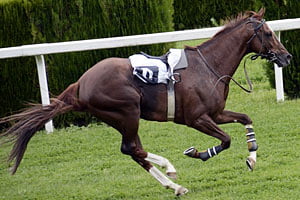
A lay bet means taking the position that a horse will not win. The important number is the liability: the amount at risk if the horse you laid wins the race. This guide explains lay odds, matched bets, liability and exchange-specific settlement issues.
Contents
Lay Betting on Horse Racing Explained
How liability, lay odds, matched bets and non-runners work
A lay bet means betting that a horse will not win. On a betting exchange, you take the other side of a backer’s bet. If the laid horse loses, your lay bet wins; if the horse wins, you pay the liability.
This makes lay betting fundamentally different from a normal fixed-odds back bet. The key number is not just the amount you want to win, but the amount you could lose if the horse you laid wins the race.
Lay = outcome does not happen
Liability matters
Exchange market
1. Back Bet vs Lay Bet
With a back bet, you profit if the selected horse wins. Your maximum loss is normally the stake.
With a lay bet, you profit if the selected horse does not win. Your maximum loss is the liability, which depends on the lay odds and your lay stake.
Lay liability = (decimal lay odds − 1) × lay stake
2. Worked Lay Bet Example
Suppose you lay a horse at 3.50 for a £10 lay stake.
- Liability = (3.50 − 1) × £10 = £25.
- If the horse loses, your gross profit is £10, before any applicable exchange commission.
- If the horse wins, you lose the £25 liability.
That risk-to-reward relationship is the most important concept in lay betting. A high lay price can create a large liability for a relatively small potential win.
3. Why Short Lay Odds Mean Lower Liability
If you lay £10 at 1.50, the liability is:
(1.50 − 1) × £10 = £5.
If you lay the same £10 at 6.00, the liability becomes:
(6.00 − 1) × £10 = £50.
This does not mean short-priced horses are automatically good lay bets. Lower liability is only one part of the decision. A horse trading at short odds is also being priced as more likely to win, so the probability side of the market still matters.
4. Matched and Unmatched Lay Bets
Exchange bets require another market participant to take the opposite side. A lay request is not fully active until it is matched.
- Matched: another customer has accepted the opposing side at the requested price.
- Partially matched: only part of your requested stake has been matched.
- Unmatched: no counterparty has yet accepted that price and stake.
Prices can move quickly, especially close to the off or in-play. That means a lay order visible on screen can become partially matched or unavailable before the entire requested amount is filled.
5. When Is a Lay Price Theoretically Attractive?
Lay betting is still a probability decision. To judge a lay price, compare the horse’s estimated true chance of winning with the probability implied by the available lay odds.
Decimal odds of 4.00 correspond to a raw implied probability of 25%. If your evidence-based estimate is that the horse actually has only a 20% chance to win, laying at 4.00 may appear favourable before commission and other market effects.
If you estimate the horse at 30%, the same lay price would be unattractive because you would be opposing an outcome that you believe is more likely than the market price implies.
6. Non-Runners Can Change Exchange Bets
A withdrawal can change the effective prices and liabilities in an exchange horse racing market. Exchanges use reduction factors or equivalent mechanisms so that remaining matched bets are adjusted after a material non-runner.
This is important for both backers and layers. If a strong contender is removed, the other horses become more likely to win, so leaving the original exchange prices unchanged would distort the market.
Exchange non-runner treatment is not identical to a standard sportsbook Rule 4 calculation, so use the exchange’s published rules for the actual market.
7. In-Play Lay Betting Adds Execution Risk
Horse racing exchange markets can move extremely quickly in-play. A horse that shortens from 5.00 to 2.00 changes your potential liability dramatically if you are trying to lay it at the current price.
There can also be transmission delay between what you see on a video stream and the actual event. Treating live pictures as perfectly synchronized with the exchange is unsafe.
Because of that, in-play lay betting requires more than race-reading skill: execution speed, order matching and price movement all matter.
8. Where Lay Bets Go Wrong
- Looking only at the potential win. Always calculate liability first.
- Assuming favourites are automatically good lays. A short price can still be fair or even too high.
- Ignoring commission. Net exchange profit can be lower than the gross amount shown in a simple example.
- Confusing stake with liability. A £10 lay at 6.00 risks £50, not £10.
- Ignoring unmatched portions. Your full requested lay may not be active.
- Using high prices without a liability cap. Liability rises linearly as lay odds increase.
- Assuming non-runners leave the market unchanged. Exchange reduction factors can alter matched bets.
9. Lay Betting Is Not the Same as “Betting on Bad Horses”
A horse can be unlikely to win and still be a poor lay if the price already fully reflects that weakness. Conversely, a strong horse can be a rational lay if you believe the market has shortened too far.
The useful comparison is probability versus price, not “good horse versus bad horse”. The exchange price determines how much liability you take on for the amount you can win.
This is also why blanket systems such as “always lay the favourite” or “always lay horses above a certain price” are not logically sufficient by themselves.
FAQ: Lay Betting on Horse Racing
What does it mean to lay a horse?
You are betting that the horse will not win the relevant market. If another horse wins, your lay bet normally wins.
How do I calculate lay liability?
For a simple win-market lay, liability = (decimal odds − 1) × lay stake.
Can I lose more than my lay stake?
Yes. At lay odds above 2.00, the liability is greater than the lay stake. For example, laying £10 at 5.00 creates £40 liability.
What happens if my lay bet is unmatched?
An unmatched portion has not been accepted by another market participant, so it is not yet an active matched bet.
Is laying favourites automatically profitable?
No. A lay bet only has theoretical value if the available price is poor relative to the horse’s true chance of winning, after considering commission and market rules.