
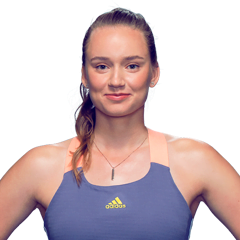
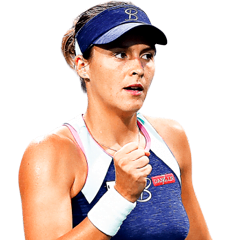
Elena Rybakina vs Tatjana Maria: Queen’s Club Round of 16
The grass-court season at the Queen's Club Championships accelerates with a captivating Round of 16 encounter between top seed Elena Rybakina and the veteran Tatjana Maria. Transitioning from the high-bouncing clay to these iconic, fast-playing London lawns requires a complete recalibration of tactical discipline. Rybakina, a powerhouse with a proven pedigree on faster surfaces, enters this match as the clear favorite. However, Maria remains a perennial threat, particularly on grass, where her trademark low-skidding slices can effectively neutralize raw power and force opponents into defensive misery. This matchup serves as a definitive clash between Rybakina’s modern "first-strike" aggression and Maria’s classical "variety and patience" tactical toolkit.
Elena Rybakina: Comprehensive Analysis
Elena Rybakina’s dominance on grass is built upon her elite serve—arguably the most efficient delivery on the WTA Tour. Her ability to secure "cheap" points allows her to play with freedom on return games, putting constant pressure on her opponents' service holds. Rybakina’s recent form demonstrates a high level of mental fortitude; she has learned to thrive in long rallies when necessary but remains at her best when keeping points under six strokes.
Recent Results
- L vs Yuliia Starodubtseva (French Open, 2R)
- W vs Veronika Erjavec (French Open, 1R)
- L vs Elina Svitolina (Italian Open, QF)
- W vs Karolína Plíšková (Italian Open, 3R)
- W vs Alexandra Eala (Italian Open, 2R)
Tatjana Maria: Tactical Variety
Tatjana Maria brings a craft-based game that feels like a throwback to a different era. Her heavy use of the backhand slice is not just a defensive choice; it is a calculated weapon to force tall opponents like Rybakina to bend extremely low. When the ball skids off the grass, the lack of pace on Maria's shots forces Rybakina to generate all her own power, which increases the likelihood of unforced errors.
Maria’s success hinges on her service placement rather than power. She relies on consistency and high tennis IQ, aiming to turn matches into "cat-and-mouse" games. If she can drag Rybakina into prolonged baseline exchanges, her chances of an upset increase significantly.
H2H and Statistical Context
Head-to-Head: Rybakina leads 1-0 (2023 Beijing, 7-5, 6-0).
Recommended Bets
| Market | Pick | Logic |
|---|---|---|
| Moneyline | Rybakina | Grass-court service dominance. |
| Handicap | -4.5 Games | Ability to capitalize on early breaks. |
| Total Games | Over 20.5 | Acknowledging Maria's ability to extend sets via tactical slices. |
FAQ
When is this match?
Scheduled for June 11, 2026. Please check the official order of play for exact start times, as it is subject to change.
Why is the Over 20.5 recommended?
While Rybakina is the favorite, Maria's style is designed to drag power-hitters into longer, tighter sets, potentially pushing the game count higher than a straight-sets blowout.
What would trigger an upset?
If Rybakina’s first-serve percentage drops below 55%, Maria could effectively dictate longer rallies and disrupt Rybakina's rhythm.
Why is handicap better than Moneyline?
It offers better value given Rybakina's aggressive intent, assuming she executes her game plan efficiently.
How does the surface affect the match?
The grass at Queen's favors Rybakina’s flat strokes and makes Maria’s low slice more effective against height.
Is the Rybakina lead in H2H significant?
It demonstrates a proven ability to handle Maria's tactical variance in a tour-level environment.