
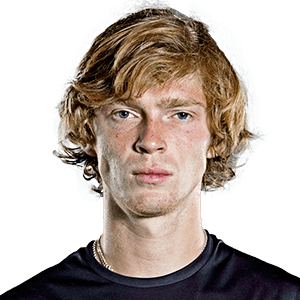

Match snapshot
Date: 2026-05-11 15:00 GMT+3
Competition: Internazionali BNL d'Italia
Market: Match Winner
Odds source: average bookmakers
Line time: 2026-05-11 15:00 GMT+3
Prediction: Andrey Rublev to Win
Displayed price: 1.67
Likely score
Andrey Rublev 2–1 Alejandro Davidovich Fokina
Confidence
Medium — power consistency edge
Implied win probability
59.9%
Match context
Quick frame
- Core matchup: Rublev relies on relentless baseline pace while Davidovich Fokina tries to disrupt rhythm through movement and variation.
- What matters most: first-strike control, second-serve stability, and who handles momentum swings more effectively.
- Why it stays dangerous: Davidovich Fokina thrives in chaotic low-margin matches with frequent game-state flips.
- Surface angle: Rome clay slightly slows Rublev’s raw pace but still rewards his repeatable win route.
Expected match script
- Rublev edge: sustained pressure through heavy forehands and aggressive court positioning.
- Davidovich Fokina threat: defensive variety and unpredictable shot patterns can destabilize rally rhythm.
- Main battle: whether Rublev can maintain offensive control without overpressing during long exchanges.
What can swing the match
- First break: early scoreboard pressure could heavily influence emotional momentum.
- Set-piece swing equivalent: second-serve return games become the highest leverage phases.
- Momentum volatility: Davidovich Fokina becomes far more dangerous if the match turns physical and chaotic.
Live marker (first 10–15 minutes)
- Rublev strengthens live if he consistently controls short attacking rallies from the baseline.
- Davidovich Fokina gains value if extended defensive exchanges begin frustrating Rublev early.
Why Andrey Rublev are favoured
Three reasons (tennis logic)
- Repeatable win route: Rublev can generate sustained pressure through heavy baseline pace and repeated attacking patterns.
- Offensive consistency: his first-strike tennis remains more stable over long matches than Davidovich Fokina’s higher-variance style.
- Match management: Rublev usually performs better in controlled tempo exchanges on clay.
What would change the read
- Davidovich Fokina controls variation and consistently extends rallies into defensive exchanges.
- Rublev loses emotional stability after early momentum swings or missed break opportunities.
Recommended bets
Selection rules
- Use Match Winner if you trust Rublev’s offensive consistency over three sets.
- Use handicap coverage if you expect a volatile but ultimately controlled Rublev victory.
- Use Under only if Rublev quickly dominates return games and baseline tempo.
| Market | Pick | Why it fits + risk |
|---|---|---|
| 1X2 | Andrey Rublev to Win | Stronger first-strike consistency and more reliable pressure from the baseline. |
| DNB | Rublev -2.5 Games | Covers a competitive match while reflecting Rublev’s overall attacking edge. |
| Total | Under 23.5 (Asian Total) | The line fits a scenario where Rublev controls most service games despite potential momentum swings. |
Final verdict
Verdict logic
- Why Rublev: stronger baseline power, more repeatable offensive patterns, and better control in structured rallies.
- Main risk: Davidovich Fokina forces a chaotic defensive battle and disrupts rhythm.
- Score logic: Rublev’s repeatable win route points toward a difficult but controlled three-set victory.
Predicted result: Andrey Rublev win
Likely score: 2–1
Confidence: Medium
FAQ
What time is Andrey Rublev vs Alejandro Davidovich Fokina?
The scheduled start time is 15:00 GMT+3 on May 11, 2026.
When does handicap coverage become better than the main pick?
The handicap option becomes stronger if you expect Davidovich Fokina to stay competitive while Rublev still controls the overall match.
What would make you avoid the bet?
Emotional instability from Rublev, unusually slow conditions, or long physical rallies early would increase volatility.
What is the main prediction and likely score?
Main pick: Andrey Rublev to Win. Likely score: 2–1 with Rublev controlling most attacking baseline phases.
Disclaimer
This content is for informational and educational purposes only. Betting involves risk and outcomes are never guaranteed.