
Betting Bonuses in Kenya: How to Compare Welcome Offers, Rollover, and Withdrawal Rules
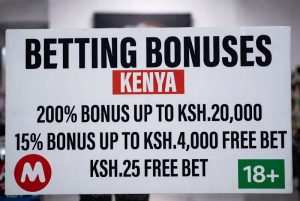
A sportsbook bonus becomes useful only when you can turn it into a clean withdrawal without changing how you normally bet. For Kenya-facing offers, the right comparison starts with four checks: what counts toward rollover, which odds and markets qualify, how long the deadline runs, and whether withdrawal or verification rules create friction at the moment you try to cash out.
What actually makes a bonus usable
A headline number matters far less than the path from opt-in to withdrawal.
The fastest way to misread a sportsbook promotion is to compare only the advertised amount. A larger matched deposit can still be weaker than a smaller offer if it demands higher turnover, stricter minimum odds, or a shorter deadline. For a player in Kenya, the practical question is not “How much is the bonus?” but “What must I do in normal betting volume before funds or bonus-linked winnings become withdrawable?”
Four questions to answer before you opt in
- What counts? Some offers clear on bonus only, while others apply rollover to the deposit and bonus together. That difference can double the required handle.
- Which bets qualify? Minimum odds, excluded markets, cashout restrictions, live-bet limits, and accumulator rules change whether your usual stake pattern will count.
- How long do you have? A short expiry window turns an offer into a pressure mechanic, especially for casual bettors.
- What happens at withdrawal? Early withdrawal forfeits, maximum payout caps, and delayed verification are where many “good” promotions stop feeling good.
Practical read: if one offer combines high rollover, strict minimum odds, short expiry, and tight payout caps, it is usually a high-friction bonus even when the headline looks generous.
The terms that decide real bonus value
These are the clauses that determine whether an offer fits your betting style or works against it.
Rollover and qualifying amount
Rollover, also called wagering or playthrough, is the required betting volume before the bonus balance or bonus-linked winnings can move toward withdrawal. The first distinction to check is whether the rule applies to bonus only or to deposit + bonus. A 5× bonus-only condition is very different from 5× on the combined amount.
Minimum odds and market eligibility
Many promotions exclude short-priced bets or certain markets entirely. If your normal slips often sit below the stated minimum odds, the bonus is already pushing you away from your natural decision-making. That is a bad sign because it changes risk just to make bets “count”.
Stake return, contribution, and caps
Free bets often work on a stake not returned basis, which reduces cash value compared with ordinary stakes. Some operators also count certain bet types below 100% toward wagering. On top of that, maximum payout or maximum stake caps can flatten upside even after a successful run.
KYC timing and cashier readiness
Verification is frequently ignored at signup and becomes visible only when the player tries to withdraw. A Kenya-facing offer should be checked not only for the promotion itself, but also for whether the payment method, account name, and identity flow are ready before cash-out. A bonus that clears on paper can still become slow or frustrating if the account is not withdrawal-ready.
For a broader operator-by-operator starting point, the country overview at https://odds2win.bet/bonuses/kenya/ can be used as the first screening layer, while the main bonus hub at https://odds2win.bet/bonuses/ helps compare how different reward types are presented.
A simple method for comparing two very different offers
Use one handle calculation and one friction check instead of judging by the headline.
Step 1 — Calculate required handle
Required handle = rollover multiple × qualifying amount. The qualifying amount may be only the bonus, or the deposit and bonus combined. Write the result in KES so the offer stops looking abstract and starts looking like a workload.
Step 2 — Estimate effective value
A quick comparison measure is bonus you can realistically keep ÷ required handle. This is not a profit promise. It is simply a way to expose offers that look large but demand so much turnover that their real value per unit of betting volume becomes weak.
Step 3 — Score friction before you join
- Low friction: bonus-only rollover, broad market eligibility, clear deadlines, early verification options, and transparent withdrawal rules.
- Medium friction: some exclusions, moderate turnover, and caps that matter only in specific use cases.
- High friction: deposit + bonus rollover, strict minimum odds, heavy exclusions, short expiry, unclear forfeit language, or delayed identity checks.
| Bonus type | Check first | Withdrawal effect | Best fit |
|---|---|---|---|
| Matched deposit | Rollover basis, minimum odds, eligible markets, time limit | Usually the most restricted until clearance is complete | Regular bettors with predictable weekly volume |
| Free bet | Stake return rule, expiry, max payout, odds floor | Often cleaner, but value falls sharply when stake is not returned | New users testing the platform with limited exposure |
| Odds boost | Eligible events, max stake, max profit, market exclusions | Usually simpler because it behaves more like a capped price enhancement | Selective bettors who already know the event they want |
| Cashback | Cash or bonus credit, net-loss calculation, weekly cap, claim rules | Cashback paid as bonus balance can still create rollover later | Casual users who want downside smoothing more than headline upside |
Worked examples that show where players usually misread value
The numbers below are illustrative, but the logic is the same on live promotions.
Example 1 — 5× bonus-only rollover
If the bonus is 2,000 KES and the rollover is 5× bonus only, the required handle is 10,000 KES. The task may still be manageable if your normal betting pace already sits near that number.
Example 2 — 5× on deposit + bonus
If the deposit is 2,000 KES and the bonus is 2,000 KES, then 5× on the combined amount means a required handle of 20,000 KES. The headline did not change, but the workload doubled.
Example 3 — Minimum odds quietly exclude your normal style
If a player places ten bets and only four meet the minimum-odds rule, only that counted volume helps clear the promotion. This is how an offer that looked easy at signup becomes slow and frustrating in practice.
Example 4 — Live-bet contribution reduces progress
If live bets count at 50% toward wagering, then a player staking 12,000 KES in live markets may receive only 6,000 KES of credited progress. That gap matters because it changes the real cost of clearing the offer.
Example 5 — Free bet value drops when stake is not returned
A 1,000 KES free bet at odds of 2.00 does not behave like a 1,000 KES cash stake if the stake itself is not returned. The player keeps the profit, not the full return profile of a normal bet.
Useful rule: the best promotion is often the one that matches your existing betting rhythm and reaches withdrawal cleanly. It is not automatically the one with the biggest number on the landing page.
The most common bonus mistakes before withdrawal
Most bonus frustration comes from a mismatch between the terms and the player’s actual behaviour.
- Opting in before reading the forfeit clause. Some offers cancel bonus funds or bonus-linked winnings if you withdraw early.
- Assuming all markets count equally. Excluded bet types, live restrictions, and reduced contribution rules can slow progress even for active users.
- Chasing higher odds just to qualify. This changes the risk profile of your betting and often turns a bonus into an expensive compromise.
- Ignoring payout caps. A free bet or boosted market can still have a maximum withdrawable return that matters more than the headline reward.
- Leaving verification until the last moment. KYC delay, account detail mismatch, or payment method inconsistency can block the final step after the turnover is already complete.
- Choosing a bonus that does not match your volume. Casual players often do better with simpler rewards than with large rollover-heavy packages.
Before you opt in, write down these points
- Required handle in KES
- Minimum odds and market exclusions
- Expiry period and any manual claim rule
- Maximum payout or stake cap
- What happens if you withdraw before clearance
- Whether the account is ready for verification and payout
If you also want to screen broader operator reliability rather than the bonus alone, the rating pages at https://odds2win.bet/rating/ help put promotional claims next to withdrawal and usability signals. For reader protection patterns and common red flags, the guide at https://odds2win.bet/articles/how-to-avoid-online-sports-betting-frauds/ is the right companion page.
FAQ
Short answers to the questions that matter most before signup and withdrawal.
What does rollover mean in practical money terms?
It is the total betting volume you must place before bonus funds or bonus-linked winnings become withdrawable. The key is to calculate it in KES, because a multiple that looks small in text can translate into a large real workload.
Why is 5× deposit + bonus harder than 5× bonus only?
Because the qualifying amount is larger. If the bonus equals the deposit, applying the same multiple to both amounts can double the required handle compared with a bonus-only rule.
What do minimum-odds rules change for an ordinary bettor?
They decide whether your natural bet selection counts toward clearance. If you normally prefer shorter prices, the bonus may push you into a different and riskier betting style just to qualify.
Do live bets always count toward wagering?
No. Some operators exclude them, while others count them at a reduced contribution rate. That is why live-focused users should check contribution rules before judging the value of any promotion.
What does “stake not returned” mean on a free bet?
It means only the profit is retained after a winning bet. The free-bet stake itself does not return to your balance, so the real value is lower than a cash stake of the same nominal size.
Why should KYC be checked before the player tries to withdraw?
Because many problems appear late, not at signup. If the verification path, payment method, or account details are not ready, a cleared bonus can still become slow to cash out.
Final read
A strong bonus is one that survives the withdrawal test, not one that wins the headline contest.
The cleanest way to compare Kenya-facing sportsbook offers is to treat every promotion as a workload question. Calculate required handle in KES, check whether your normal odds range and market selection qualify, then read the withdrawal and verification clauses before you opt in. That process removes most bonus noise immediately. It also protects casual and new users from choosing a reward package that looks attractive on the first screen but becomes awkward once real money, time pressure, and cash-out conditions enter the picture.
This guide is for comparison and practical reading only. Any promotion that pushes you into higher volume, unfamiliar markets, or rushed decisions is usually a poor fit regardless of its advertised size.