
Best Betting Sites in Uganda: Mobile Money, Verification, and Withdrawal Reliability
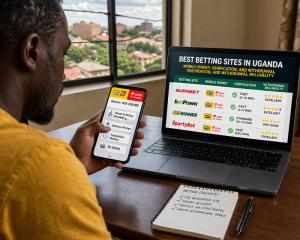
In Uganda, the real test of a betting site begins when you try to withdraw, not when you sign up. MTN Mobile Money and Airtel Money can make deposits feel simple, but the payout process is where reliability becomes clear. This guide looks at cashier transparency, verification timing, wallet consistency, and the warning signs that often appear before delays, forced bank transfers, repeated KYC checks, or a balance that gets pushed into review instead of reaching your mobile wallet normally.
Cashier reality in Uganda
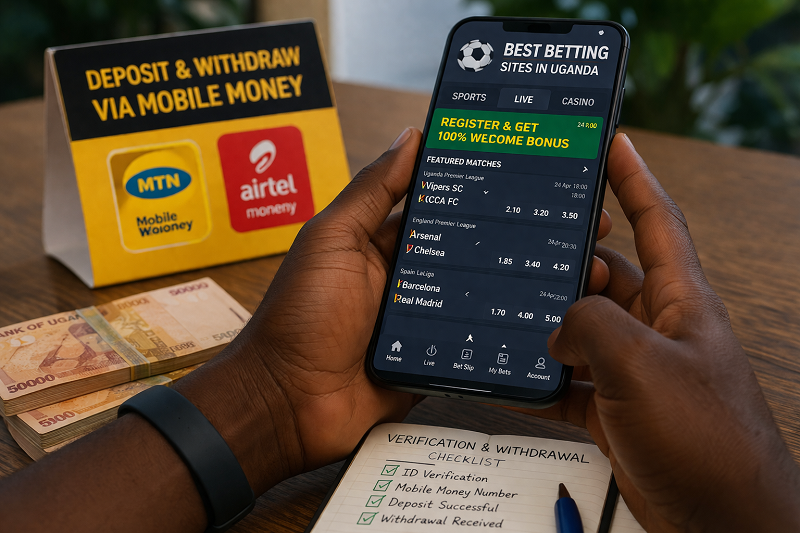
For most users in Uganda, a betting site reveals its real quality only when the withdrawal button is pressed. Deposit screens are easy to make look smooth. Payout logic is harder to fake. That is why cashier clarity matters more than a louder bonus headline or a slightly stronger pre-match price. If a site accepts MTN Mobile Money or Airtel Money without friction but then starts changing routes, adding review steps one by one, or forcing a bank fallback after a win, the user experience breaks at the point that matters most.
How mobile money usually works on betting sites in Uganda
Ugandan users usually judge a betting cashier through daily practicality, not theory. Mobile money is the benchmark because it matches how deposits and withdrawals are handled in real life. But a site should not be treated as reliable merely because it shows wallet options at the front end. The stronger test is whether the same method stays available for withdrawals, whether limits are visible before deposit, and whether status updates move in a predictable way from request to completion.
- Best-case path: deposit and withdrawal stay on the same wallet rail, with matching account details and no forced detour.
- Common friction point: a mobile money deposit is accepted fast, but the withdrawal is pushed into manual review or redirected to another method.
- Bad signal: the cashier advertises wallet support clearly at signup, then removes or de-prioritizes that route only after the balance becomes worth withdrawing.
Why this matters more than odds
A slightly better price has limited value if the payout path becomes uncertain later. In Uganda, a cleaner cashier with predictable mobile money withdrawals is usually worth more to the user than a promotion that looks bigger on the landing page but creates balance friction after a win.
When verification slows down withdrawals
Verification is not the problem by itself. A normal operator needs to confirm identity, payment ownership, and account consistency. The real difference appears in timing and clarity. A reliable bookmaker shows the basic rules early: the account name must match the payment details, the phone or wallet must belong to the same user profile, and the review process should be clear before the first withdrawal is attempted. A weaker operator often waits until the balance grows, then starts adding new requests in layers.
Typical verification triggers
- First meaningful cash-out: small deposits may pass quietly, but the first serious withdrawal often activates document checks.
- Larger payout relative to normal play: a sudden jump in withdrawal size can move the request from auto-processing into manual review.
- Mismatched details: a different name, different number, or different wallet holder is one of the most common reasons for delay.
- Repeated method switching: moving between deposit channels can make the account look less clean from a compliance perspective.
- Fragmented account behavior: frequent edits to personal details before cash-out can trigger extra scrutiny even when the balance is legitimate.
What repeated KYC usually looks like
Normal KYC is usually one clear review step. Repeated KYC often looks different: one document is approved, then another request appears later, then another small mismatch is raised, and the withdrawal stays in motion without truly moving forward. That pattern does not always mean refusal, but it is a weaker cashier signal than a single, upfront verification process.
What payout reliability looks like in practice
Payout reliability is a pattern, not a slogan. The stronger operators usually show stable withdrawal rails, visible minimum and maximum limits, and a short gap between “approved” and “paid.” The weaker ones often feel usable on deposit, then become vague as soon as the user asks to exit. That is why it helps to judge the cashier as a full route rather than a single button.
| Signal | What it usually means | Why it matters |
|---|---|---|
| Visible withdrawal methods before deposit | The operator is prepared to show the exit path early rather than hiding it until funds are in the account. | You can judge real payout options before committing money. |
| Stable wallet limits | The payment setup is more organized and less likely to change under normal load. | There is less risk of a forced switch to bank transfer after a win. |
| Fast move from pending to paid | Manual review exists, but it is controlled rather than chaotic. | A request is less likely to sit in an endless review state. |
Practical signs of a weaker payout path
- Approval without completion: the request looks accepted but does not actually settle into the wallet.
- Bank fallback without clear reason: the site suddenly prefers a method the user never planned to use.
- Limit changes after the balance grows: caps that only become visible after a win create unnecessary payout friction.
- Status language that stalls: processing, pending, or under review should describe a temporary stage, not become a permanent condition.
How to judge a betting site before trusting it with money
The safest approach in Uganda is to test the cashier first and the offer second. A site may show a broader market list or a louder signup incentive, but those advantages matter less if the payment system becomes difficult when the user wants funds back. Practical evaluation starts before the first stake.
- Check both sides of the cashier: do not assume that a visible deposit icon means the same method is reliable for withdrawals.
- Read limits before funding: split payouts, method caps, or manual review thresholds matter more than promo copy.
- Review the wording around verification: stronger sites explain when identity checks happen and what matching details are required.
- Look at status language: a good cashier usually gives understandable progress rather than generic holding phrases.
- Watch for the shift after a win: some sites feel frictionless until the account wins, then the cashier suddenly becomes stricter.
Why “deposit success” is not proof
A fast deposit only proves that money can enter the platform. It does not prove that the operator handles wallet verification well, pays out to the same route cleanly, or avoids soft holds on meaningful withdrawals. For a Uganda-facing review, the payout path is more informative than the deposit path.
Main priorities for Ugandan users
For Uganda, a useful ranking logic starts with cashier behavior. The strongest sites are usually the ones that respect the full path from deposit to withdrawal without adding unnecessary friction halfway through. That makes mobile money support, early KYC clarity, and predictable pending times more valuable than superficial marketing strength.
- Priority one: mobile money withdrawal support that stays visible and usable after the account wins.
- Priority two: KYC rules that appear early instead of emerging only after a withdrawal request.
- Priority three: predictable pending times, not open-ended review language.
- Priority four: consistent limits that do not suddenly change once a larger payout is requested.
- Priority five: fewer forced switches between wallet, bank, and manual payout routes.
What the better sites usually get right
The better Uganda-facing betting sites usually do not need to invent new explanations after a win. Their cashier behavior already makes sense. Methods remain visible, limits are readable, support language is more precise, and the balance does not disappear into repeated review loops. That is the kind of reliability that matters more than a louder headline bonus, because the real trust test begins only after the withdrawal request is submitted.
FAQ
Do betting sites in Uganda usually support mobile money withdrawals?
Many do, but support quality varies. Some keep MTN Mobile Money or Airtel Money available for both deposit and withdrawal, while others support mobile money only on the way in and change the payout route later.
Why does verification often start when I request a withdrawal?
Because many operators treat the first meaningful cash-out as the real compliance checkpoint. That is normal up to a point, but repeated new requests after partial approval are a weaker cashier signal.
What is the biggest warning sign in a betting cashier?
A strong warning sign is when the deposit method looks simple and stable, but the same route becomes unavailable, vague, or heavily delayed as soon as the balance needs to leave the account.
Is it normal to be asked for proof that my wallet belongs to me?
Yes. Matching the account name, phone number, and payment ownership is a normal part of KYC. The issue is not the request itself, but whether the operator explains it clearly and handles it in one clean review stage.
What does bank fallback mean on a betting site?
It usually means the site is pushing the user away from the preferred wallet route and toward a bank payout instead. Sometimes this is operational, but when it appears without clear explanation, it is a weaker payout-path signal.
Why can a small withdrawal pass and a larger one get delayed?
Because larger amounts often trigger manual review, stricter limits, or additional checks tied to account consistency. This is exactly why visible payout thresholds matter before a user deposits.
Should I trust a site if deposits are instant?
No. Fast deposits are common. What matters more is whether withdrawals settle through the same route, whether limits stay stable, and whether review stages move forward instead of looping.
How can I tell whether KYC is normal or excessive?
Normal KYC is usually one clear review with understandable requirements. Excessive KYC often appears in fragments: one request is satisfied, then another appears, then another, while the payout still does not complete.
Is a bigger bonus worth it if the cashier looks weaker?
Usually not. For Uganda, a cleaner payout path is often more valuable than a louder promotion, because the bonus loses practical value if the withdrawal process becomes uncertain later.
What should I check before making the first deposit?
Check whether the same wallet method appears on both deposit and withdrawal, review the payout limits, read the verification wording, and look for any signs that mobile money support becomes less clear on the way out.