
Model-Based Football Predictions Explained (xG, Elo, and What a Model Can’t Know)
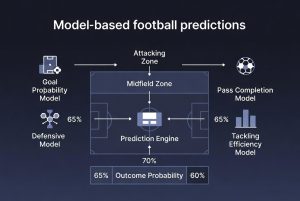
Model-Based Football Predictions Explained: xG, Elo, and Realistic Expectations
A model is a probability engine: it turns past evidence into likelihoods. It can be useful over many matches, but it cannot guarantee what happens in one specific game.
In simple terms, xG describes chance quality (how good the shots were), and Elo is a rolling strength rating built from results and opponent strength. Both are signals — not promises.
Model signals in one place
Use model outputs as probabilities and baselines — not as certainty.
1) What a “model-based prediction” really means
A football model is a set of rules (math + assumptions) that turns historical data into probabilities. Common outputs:
- 1X2 probabilities — a probability split, not a promise.
- Expected goals (xG) — an estimate of chance quality created and conceded.
- Elo-like strength — a rolling rating that summarizes team strength over time.
Good models are often wrong on individual matches — they are evaluated on calibration over many games.
3) Elo in plain English
Elo is a rolling rating that moves up or down based on results and opponent strength. Rating gaps translate into baseline win probabilities.
What Elo does well
- Stable baseline: a clean long-run strength signal.
- Works without event data: can be built from match results alone.
Elo can lag sudden change (injuries, rotations, tactical shifts) until enough matches confirm it.
2) xG in plain English
xG assigns a scoring probability to each shot. Add up those probabilities and you get team xG.
What xG is good at
- Performance signal: chance quality can be more stable than goals in short samples.
- Separating finishing from creation: helps distinguish “played well” from “finished well.”
2.0 xG does not mean “2 goals will happen.” It means “the chances were worth about 2 goals on average.”
What xG cannot fully capture
Game state, red cards, and provider differences (definitions, pressure data, set-piece handling) can change the picture.
4) What you can (and cannot) expect
What you can expect
- Better long-run frequency: probabilities are most meaningful across many matches.
- Consistency: avoids story-driven overreaction.
What you should not expect
- Exact score certainty: the “most likely score” is rarely a large share of outcomes.
- Perfect late-news awareness: last-minute changes can break the baseline.
- Red-card stability: rare events can flip match dynamics instantly.
Probability to “fair odds” (decimal): fair_odds = 1 / p
Small edges are fragile: tiny probability gaps can sit inside normal model error.
FAQ: Model-Based Predictions (xG & Elo)
Seven quick answers that match the most common misunderstandings.